
The United Arab Emirates has delivered what experts are calling a "pivotal moment" for global energy markets, announcing its withdrawal from the Organization of the Petroleum Exporting Countries (OPEC) and the wider OPEC+ alliance effective May 1, 2026. The decision, which ends nearly six decades of membership, is sending shockwaves through the oil world and raising critical questions for investors about where crude prices—and energy stocks—are headed next.
Brent crude was trading at $111–113 per barrel at the time of the announcement, while West Texas Intermediate hovered above $105, reflecting the extraordinary geopolitical backdrop of the ongoing Iran war and the blockade of the Strait of Hormuz that has removed roughly 12% of global oil supply from the market.
How the UAE's Split from OPEC Unfolded
The UAE's departure is the most significant exit in OPEC's 65-year history. The Emirates joined the cartel in 1967 and is its third-largest producer, behind only Saudi Arabia and Iraq. Its energy ministry issued a statement confirming the decision followed "a careful review of current and future policies related to the level of production," emphasizing the move was a "sovereign national decision." Energy Minister Suhail Mohamed al-Mazrouei told Reuters the UAE did not consult other countries before announcing the exit.
While the timing surprised markets, the seeds of this split were planted years ago. The UAE has invested more than $150 billion through state-owned Abu Dhabi National Oil Company (ADNOC) to expand production capacity to 5 million barrels per day. But under OPEC's quota system—dominated by Saudi Arabia—much of that capacity remained underutilized. Max Pyziur, research director at the Energy Policy Research Foundation, told Fox Business: "Outside of the cartel, the Emirates will be able to produce more oil. It makes sense that they would want to break away."
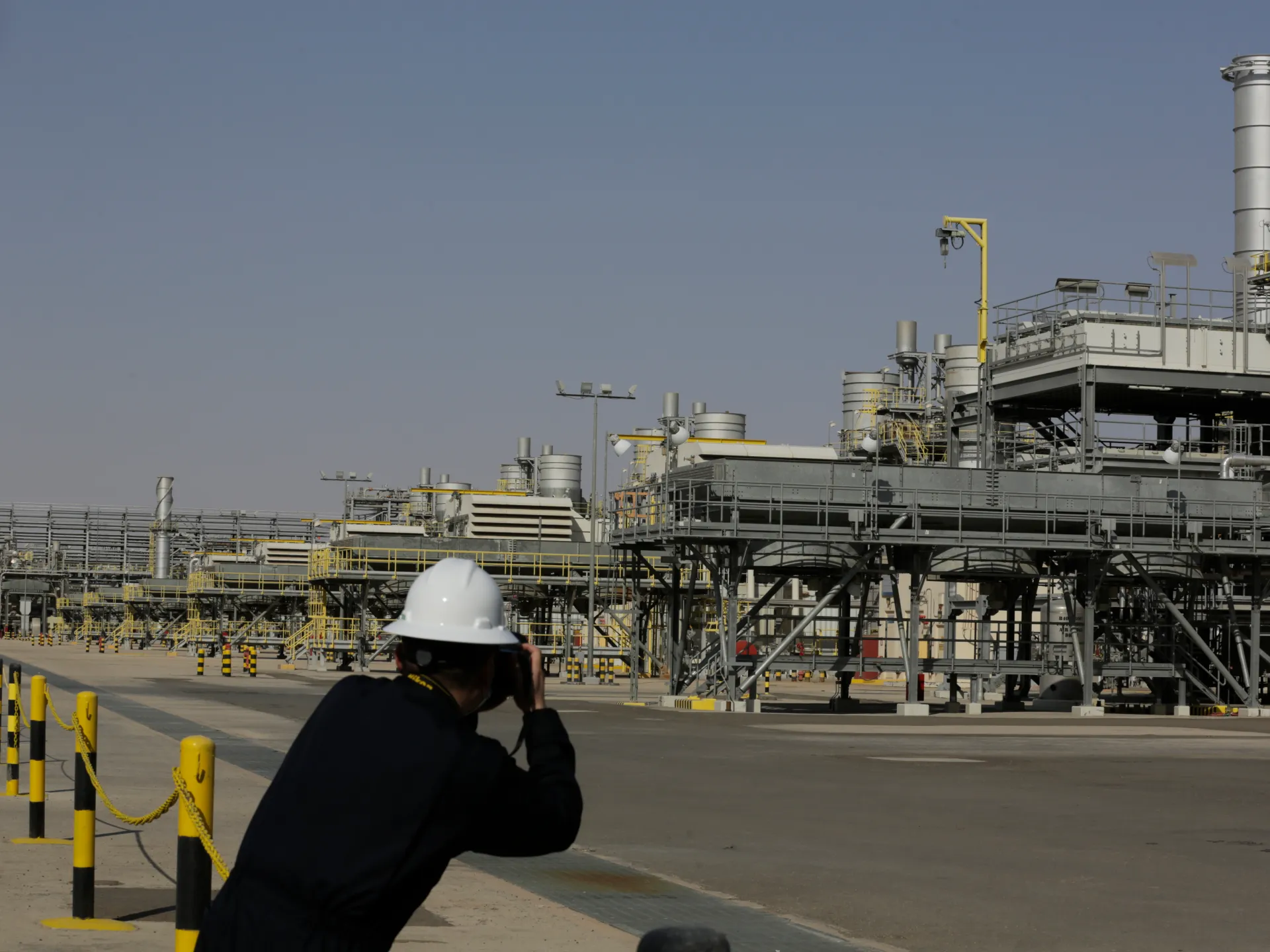
Timeline: How the OPEC Exit Came Together
The UAE's path to leaving OPEC has been years in the making. Here are the key milestones:
2019: Qatar leaves OPEC, citing a desire to focus on natural gas production. The UAE begins studying its own potential exit around this time, according to CFR's Steven A. Cook.
2023-2024: Tensions between Abu Dhabi and Riyadh intensify over OPEC+ production quotas. The UAE pushes for higher baseline production targets but faces resistance from Saudi Arabia. Angola leaves OPEC in early 2024.
Late February 2026: War breaks out between the US/Israel and Iran. The Strait of Hormuz becomes a conflict zone, with Iran threatening and attacking vessels. Gulf oil producers struggle to ship exports through the narrow choke point.
March-April 2026: The UAE increasingly relies on its 249-mile Habshan-to-Fujairah pipeline to bypass the Strait of Hormuz, shipping oil directly to the Gulf of Oman.
April 28, 2026: The UAE formally announces it will leave OPEC and OPEC+ effective May 1, citing the need for "flexibility" in production decisions and alignment with its "long-term strategic and economic vision."
April 29, 2026: Oil prices initially dip 2-3% on futures contracts before recovering. Brent climbs back above $112 as the market prices in the Hormuz blockade risk premium.
Why This Matters for Investors
The UAE's exit carries significant implications for commodity investors, energy equity holders, and anyone with exposure to oil markets. Here's what the experts are watching:
Short-term: Limited price impact expected. Most analysts agree the immediate effect on crude prices will be muted. The Strait of Hormuz blockade means additional supply from the UAE cannot easily reach global markets anyway. "As the US-Iran conflict continues, and the Strait of Hormuz remains impassable, the most significant issue for the crude market is not production, but actually shipping product to where it is needed," Michael Brown, Senior Research Strategist at Pepperstone, told Gulf News.
Medium-term: A supply wave when Hormuz reopens. The UAE plans to boost output from its current 3.4–3.6 million barrels per day to 5 million barrels per day by 2027. Once the strait reopens, this additional supply could flood markets and pressure prices lower. Ole Hansen, Head of Commodity Strategy at Saxo Bank, noted that the conflict has "drained global commercial and strategic crude inventories, leaving the market facing a prolonged rebuilding phase once hostilities end," suggesting additional UAE supply could be absorbed without crashing prices.
Energy stocks: A resilient play. Despite the geopolitical turmoil, energy equities have held up well. Maurizio Carulli, global energy analyst at Quilter Cheviot, told Euronews that integrated majors such as BP, Shell, TotalEnergies, ENI, Chevron, and ExxonMobil are "benefitting from a price uplift that could add 5-10% to operating cash flow for every $10 increase in oil prices." With Brent above $110 per barrel, these companies are generating substantial free cash flow.
The domino effect: Who could be next? Perhaps the biggest risk for OPEC is that other members follow the UAE out the door. "Iraq will probably be thinking that if rich UAE is quitting, then why should we be left holding the bag," Clayton Seigle, senior fellow at CSIS, told Fox Business. "The big risk is the domino effect with more countries following the UAE out the door, and that would weigh on medium-term oil prices." A collapse of OPEC cohesion could ultimately lead to far lower oil prices worldwide as members compete for market share.
On the flip side, the US energy sector stands to benefit. American oil production now exceeds 13 million barrels per day, and a weaker OPEC gives US producers more pricing freedom and global market share.
Where Things Stand Now
The UAE's withdrawal takes effect on May 1, making it the fifth country to permanently leave OPEC. The remaining 11 members—including Saudi Arabia, Iraq, Kuwait, Iran, and Venezuela—continue to operate under the cartel's framework, but their collective market power is diminished. OPEC+ still controls roughly 50% of global oil production, but the loss of the UAE (which accounted for about 47% of OPEC's crude exports in 2025, according to Kpler data) weakens its ability to coordinate supply.
The Strait of Hormuz remains the dominant near-term variable. Iran recently proposed a ten-point plan to reopen the waterway in exchange for a US naval blockade withdrawal and end to hostilities. President Trump described the offer as "much better" than previous iterations but has not accepted the terms. Until a resolution is reached, approximately 20% of the world's crude and LNG flows remain at risk.
What Happens Next: The Road Ahead for Oil Markets
Looking forward, investors should watch several key developments. First, the Iran war ceasefire negotiations will determine when the Strait of Hormuz reopens—the single most important variable for oil prices. Second, watch for signals from Iraq and other OPEC members about their own commitment to the cartel. Third, track the UAE's actual production ramp-up: if it accelerates toward 5 million bpd faster than expected, it could pressure prices sooner.
Carole Nakhle, CEO of energy consultancy, summed up the strategic calculus: "The UAE's decision to leave OPEC may look abrupt, but it has been building for years. Abu Dhabi has long been frustrated by production constraints despite investing heavily in expanding capacity, particularly amid uneven compliance within the group."
For investors, the key takeaway is that the oil market is entering a new era of uncertainty—but also opportunity. Higher volatility means larger potential swings in both directions, and energy companies with strong balance sheets and low-cost production are well-positioned to capitalize.
Key Takeaways
- The UAE leaves OPEC effective May 1, 2026 after 59 years, driven by quota frustrations, Saudi tensions, and $150B+ in capacity investments.
- Oil prices are elevated at $111-113 Brent due to the Iran war and Strait of Hormuz blockade, not the UAE exit itself.
- Limited short-term impact on prices because the Hormuz blockade prevents additional supply from reaching markets.
- Long-term risks skew lower for oil prices once the strait reopens and UAE ramps up to 5 million bpd, especially if other OPEC members follow.
- Energy equities remain attractive with majors seeing significant cash flow boosts from elevated prices, making them a resilient portfolio holding through the volatility.