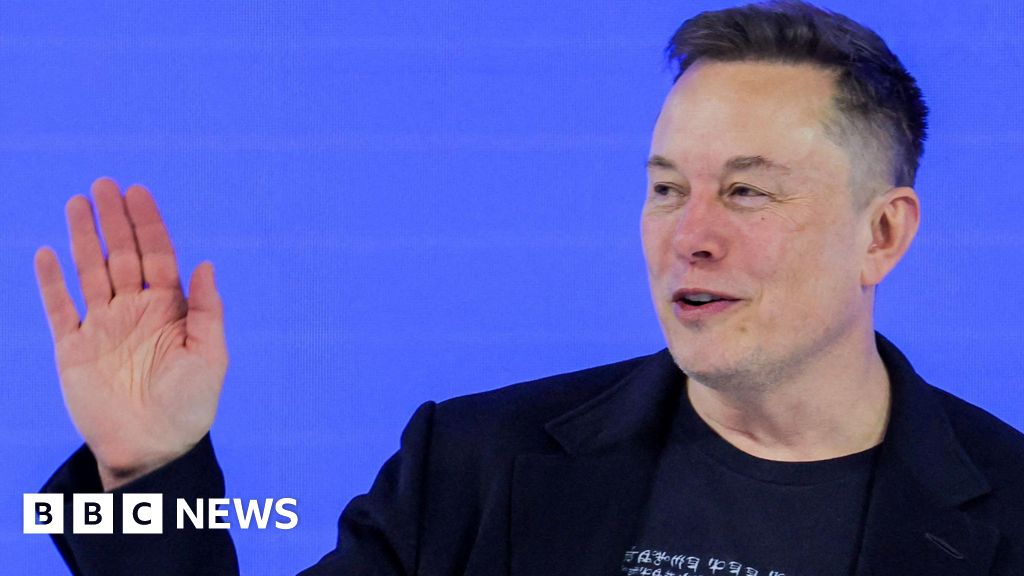
Elon Musk has just orchestrated the largest private company merger in history, with SpaceX acquiring his artificial intelligence startup xAI in a deal that values the combined entity at a staggering $1.25 trillion. The blockbuster merger, announced on Monday, February 2, 2026, instantly creates the world's most valuable private company and catapults Musk's personal net worth past $800 billion, making him the first person ever to reach that milestone. This historic transaction represents more than just corporate consolidation—it marks the convergence of space exploration and artificial intelligence in ways that could redefine entire industries and create unprecedented investment opportunities.
How the $1.25 Trillion Deal Unfolded: Inside the SpaceX-xAI Merger
According to documents reviewed by multiple financial publications, the merger values SpaceX at $1 trillion and xAI at $250 billion, creating a technological behemoth that surpasses even Tesla's current market capitalization. The deal structure involves a share exchange where xAI shareholders receive 0.1433 shares of SpaceX stock for each xAI share they own. This exchange ratio reflects the relative valuations and represents what analysts are calling "one of the most sophisticated valuation exercises in private market history."
Bloomberg reports that the merger came together rapidly over the past month, with Musk personally driving negotiations between the two companies he controls. "This isn't just about combining balance sheets," Musk stated in a memo to employees obtained by Reuters. "SpaceX and xAI together will create an innovation engine that accelerates our mission to make life multiplanetary while ensuring artificial intelligence develops in ways that benefit humanity." The merger comes just ahead of what sources describe as a "mega IPO" planned for later this year, which could represent the largest public market debut ever attempted.
From $24 Billion to $250 Billion: The Meteoric Rise of xAI
Just 20 months ago, xAI was valued at $24 billion following a $6 billion Series B funding round that included participation from Valor Equity Partners, Vy Capital, Andreessen Horowitz, and Sequoia Capital. The startup, founded in 2023 as Musk's answer to OpenAI, has experienced one of the most explosive valuation increases in technology history—surpassing 10x growth in less than two years. This growth trajectory has been fueled by the rapid adoption of Grok, xAI's flagship chatbot that now serves over 150 million monthly active users.
"What we're witnessing with xAI is unprecedented," noted a venture capital analyst who participated in the 2024 funding round. "The company went from launching its first product to becoming a $250 billion entity in essentially 18 months. This represents not just technological achievement but Musk's unique ability to leverage his ecosystem of companies—Tesla for AI compute, X for distribution, and now SpaceX for orbital infrastructure." The merger effectively brings xAI's AI capabilities under the same corporate umbrella as SpaceX's satellite constellation, creating what industry experts describe as "the first integrated space-AI platform."
Why This Merger Matters: Expert Analysis and Investment Implications
Financial analysts are divided on the immediate implications for investors, but consensus is building around several key points. First, the merger creates what Goldman Sachs analysts call "the most complete technology stack in existence," combining SpaceX's Starlink satellite network with xAI's large language models to create AI services that can operate anywhere on Earth—or beyond. Second, the deal positions the combined entity to dominate what analysts project will be a $5 trillion space-based data and AI market by 2035.
"This isn't just about today's valuation," explains Dr. Alicia Chen, senior technology analyst at Bernstein Research. "SpaceX-xAI creates a vertically integrated ecosystem where AI models train on data collected from space-based sensors, then deploy intelligence through the same satellite network. The synergies are staggering—we're looking at potential cost reductions of 40-60% for AI inference at scale, which could disrupt everything from cloud computing to autonomous vehicles." For investors, the key question becomes how to gain exposure to this new entity, with private market transactions already showing premium pricing for SpaceX shares.
Where Things Stand Now: The Current State of the Musk Empire
Following the merger, Elon Musk now controls what analysts term "the Muskonomy"—a collection of interconnected companies worth approximately $2.8 trillion in combined enterprise value. His personal stake in the new SpaceX-xAI entity is estimated at 43%, worth approximately $538 billion, while his Tesla holdings add another $210 billion to his net worth. This brings his total estimated wealth to $848 billion, surpassing the GDP of all but 18 countries.
The regulatory landscape presents both challenges and opportunities. While the merger doesn't trigger traditional antitrust concerns (as both companies were already under Musk's control), it does raise questions about vertical integration in critical infrastructure. The Federal Trade Commission has announced a "routine review" of the transaction, though most legal experts expect approval given the unique circumstances. Meanwhile, international regulators in Europe and China are taking a more cautious approach, with the European Commission announcing it will "closely examine the implications for competition in both space and AI markets."
What Happens Next: The Road Ahead for SpaceX-xAI and Investors
The most immediate development investors should watch is the planned IPO, which sources indicate could occur as soon as Q4 2026. Bankers familiar with the preparations suggest the offering could seek to raise $50-75 billion, which would shatter the current record held by Saudi Aramco's $29.4 billion listing. Pre-IPO shares are already trading at a significant premium in secondary markets, with recent transactions valuing the combined company at $1.35 trillion—8% above the merger valuation.
Longer term, analysts see three potential paths: First, continued integration of AI throughout SpaceX's operations, potentially leading to fully autonomous rocket launches and satellite management. Second, expansion into commercial AI services leveraging the Starlink network, creating what Morgan Stanley analysts call "the first orbital AI cloud." Third, and most speculative, is what some are terming "the Trinity merger"—a potential combination of Tesla with the SpaceX-xAI entity to create what would essentially be a $4 trillion technology conglomerate.
The Bottom Line: Key Investment Takeaways
For investors navigating this historic development, several clear implications emerge. First, the merger validates the convergence of space and AI as the next frontier of technological innovation. Second, Musk's unique position across multiple industries creates synergies that traditional competitors cannot easily replicate. Third, the impending IPO represents what may be a once-in-a-generation opportunity to invest in what could become the world's most valuable company. Finally, the sheer scale of the deal—and Musk's resulting wealth concentration—suggests that what we're witnessing isn't just another corporate transaction, but rather the emergence of a new paradigm where a single visionary can coordinate technological progress across multiple domains simultaneously.
As one veteran Wall Street analyst summarized: "We've seen technology revolutions before, but we've never seen one person orchestrate them across space, AI, electric vehicles, and social media simultaneously. Whether you view this as concerning concentration or brilliant coordination, the investment implications are profound. The SpaceX-xAI merger isn't just changing who owns what—it's changing what's possible."