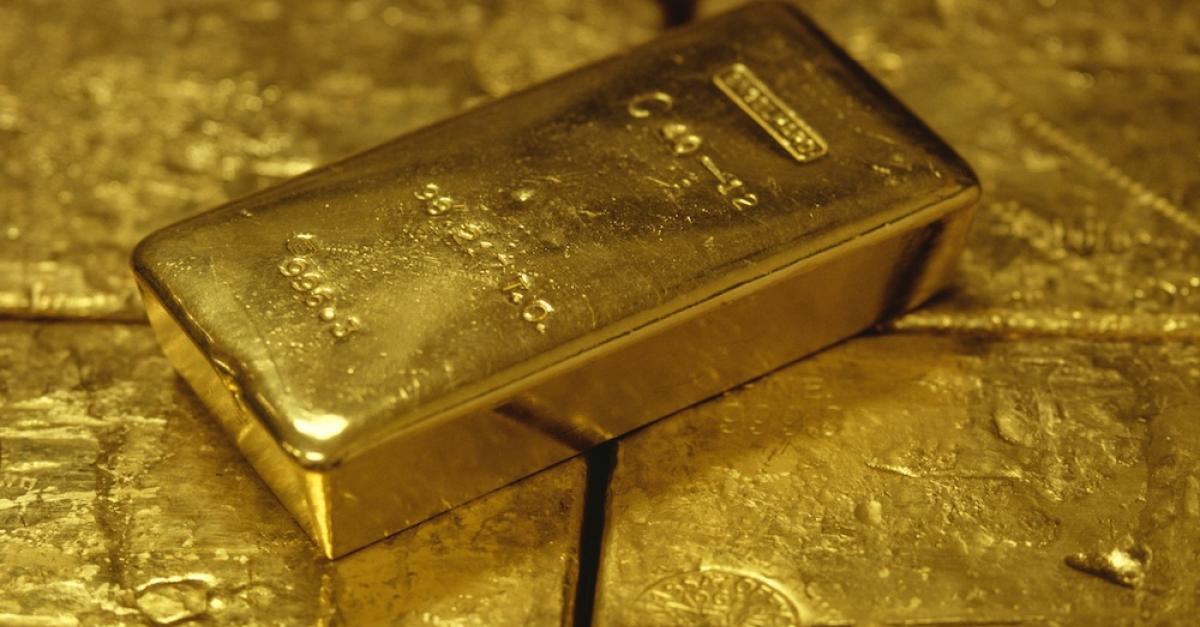
Gold has staged a historic rally, shattering records with prices soaring above $5,500 per ounce and global demand surpassing 5,000 tonnes for the first time in 2025. This unprecedented surge, driven by a structural erosion of trust in monetary policy, massive central bank purchases, and escalating geopolitical tensions, has transformed gold from a traditional safe-haven asset into a strategic portfolio necessity for investors worldwide. As the precious metal notches its 53rd all-time high of the year, financial experts are questioning whether gold's rally signals deeper systemic vulnerabilities in the global financial system.
How Gold's Record Run Is Redefining Safe-Haven Investing
According to Morningstar analysis, gold pushed to a new all-time high of $5,555 per ounce on January 28, 2026, translating into a 100% gain over the previous twelve months. This remarkable performance represents the metal's best start to a year since 1980, when it rallied approximately 20.1% in US dollar terms over the same period. Diego Franzin, head of portfolio strategies at Plenisfer Investments, notes that "gold's record highs are not pricing imminent crisis, but a world of persistent instability, heavy debt burdens and eroding monetary trust."
The World Gold Council's 2025 Gold Demand Trends report reveals that total gold demand (including over-the-counter transactions) topped 5,000 tonnes during a year which saw 53 all-time highs in the gold price. Investment fueled the gold market last year: safe haven and diversification motives drove huge ETF inflows and exceptional bar and coin buying. Central bank purchases reached 863 tonnes in 2025, remaining historically elevated and geographically widespread.

From $2,000 to $5,500: The Meteoric Rise of Gold Since 2024
The current gold rally has roots in the post-pandemic monetary environment but accelerated dramatically throughout 2024 and 2025. In early 2024, gold traded around $2,000 per ounce as investors anticipated Federal Reserve rate cuts. However, as geopolitical tensions escalated with the US-China trade war intensification and Russia-NATO conflicts, gold began its steady ascent. By September 2024, following the Fed's first rate cut, gold surged to $2,789 per ounce before experiencing temporary pullbacks.
2025 proved to be the breakout year. Gold prices climbed 55% throughout the year, surpassing $4,000 by mid-year and breaking through the psychological $5,000 barrier in November. The final weeks of 2025 saw gold reach $5,200, setting the stage for the explosive January 2026 rally that carried prices above $5,500. According to Reuters analysis, central bank gold buying, a key driver of prices in 2025, is expected to stay strong throughout 2026, with Goldman Sachs forecasting purchases to average at historically elevated levels.
Why Gold's Rally Is More Than Just Inflation Hedge
Fund managers and analysts point to a fundamental shift in how gold behaves within financial markets. Historically, gold prices exhibited an inverse relationship with real interest rates – when rates rose, gold typically fell. However, this relationship has broken down since 2022-2023, when despite a sharp rise in real interest rates, gold prices continued climbing moderately. Kenneth Lamont, principal manager research analyst at Morningstar, explains that "central banks' persistent buying of gold has broken its historical link to real yields, reshaping how the metal behaves during interest rate cycles."
Geopolitical unrest has encouraged investors to reassess the concentration of risk within the global security and financial systems. "This reassessment has prompted central banks, particularly in emerging markets, to diversify away from US dollar-denominated reserves, a process that has increasingly involved the accumulation of gold," Lamont adds. The Guardian's analysis of the extraordinary rise in investment into silver and gold points to factors including Trump's aggressive policies and pressure on the dollar pushing investors toward the 'safe haven' of precious metals.
Where Gold Stands Today: Prices, ETF Flows, and Market Sentiment
As of late January 2026, gold spot prices have experienced some volatility, with TradingEconomics reporting a price of $5,073.16 per ounce on January 30, down 5.65% from the previous day. However, over the past month, gold's price has risen 17.44%, and it remains up 81.37% compared to the same time last year. Morningstar data indicates European-domiciled gold ETFs have attracted over €2 billion since the start of 2026, reflecting continued strong investor interest despite recent price fluctuations.
The CNBC report on January 30 highlighted that gold and silver prices fell following President Trump's nomination of Kevin Warsh as Federal Reserve Chair, with front-month gold contracts losing 3.4% in New York. This reaction underscores the market's sensitivity to US monetary policy appointments, though analysts view such pullbacks as temporary within the broader bullish trend. According to Matt Bance, portfolio manager at T. Rowe Price, "We do not read recent price dynamics as a signal to chase performance, but as confirmation that the macro conditions, in which gold has historically generated value, remain valid."
Expert Outlook: How High Can Gold Go in 2026?
Financial institutions have begun revising their gold price targets upward in response to the sustained rally. J.P. Morgan Global Research's gold price predictions, published in December 2025, anticipate continued strength, with analysts questioning "Will gold prices break $5,000/oz in 2026?" – a threshold already surpassed. UBS has raised its gold price target to $6,200 per ounce on strong demand outlook, while Citi predicts silver could reach $150 per ounce in 2026, suggesting continued momentum across precious metals.
George Cotton, portfolio manager at Bank J. Safra Sarasin, identifies US political developments as a key variable. "If US President Donald Trump shifts toward the middle ground on some contentious policies, especially trade and defense, that could take the wind out of the gold rally's sails. But if the Trump administration continues on its current course, that is more fuel for the rally," Cotton says. An analysis by Pictet AM suggests the Trump administration is on track to expand the US budget deficit by more than $3 trillion in the coming decade, which would further support gold prices.
Key Takeaways for Investors Navigating the Gold Rush
For investors considering gold exposure, several critical points emerge from the current market dynamics. First, gold's role has evolved from a simple inflation hedge to a strategic diversifier against monetary policy uncertainty and geopolitical risk. Second, central bank buying represents a structural shift that may sustain demand regardless of interest rate movements. Third, while profit-taking and dollar strength may trigger periodic pullbacks, the fundamental drivers appear firmly intact.
Maurizio Mazziero, an independent financial analyst and commodities expert based in Italy, offers cautious advice: "The reasons for investing in gold will continue to exist for some time. Of course, the psychological threshold of $5,000 is significant and may trigger profit-taking; the higher the price rises, the greater this risk becomes." For those without current exposure, Mazziero suggests waiting for profit-taking to occur, perhaps for prices to fall by 10%, before initiating positions using a dollar-cost averaging approach.
As gold continues to rewrite record books, its journey reflects broader transformations in the global financial landscape. Whether as insurance against systemic risk, a bet against monetary debasement, or simply a diversifier in turbulent times, gold's historic rally of 2025-2026 may well represent a new chapter in the millennia-old relationship between humanity and the precious metal that has fascinated civilizations since antiquity.