
Name: Scott Raymond Adams
Age: 68
Birthday: June 8, 1957
Born: Windham, New York, USA
Net Worth: Approximately $20 million
Fun Fact: In 2016, Adams predicted Donald Trump's presidential victory with 98% certainty, citing Trump's persuasion skills as a masterclass in influence.
Scott Adams, the cartoonist behind the iconic "Dilbert" comic strip, built a multimillion-dollar empire by capturing the absurdities of corporate life. His journey from a frustrated office worker to one of the world's most syndicated cartoonists is a testament to how a simple idea, executed with relentless consistency, can generate extraordinary wealth. Adams passed away on January 13, 2026, at age 68 after a battle with prostate cancer, leaving behind a legacy that extends far beyond the cubicles he satirized.
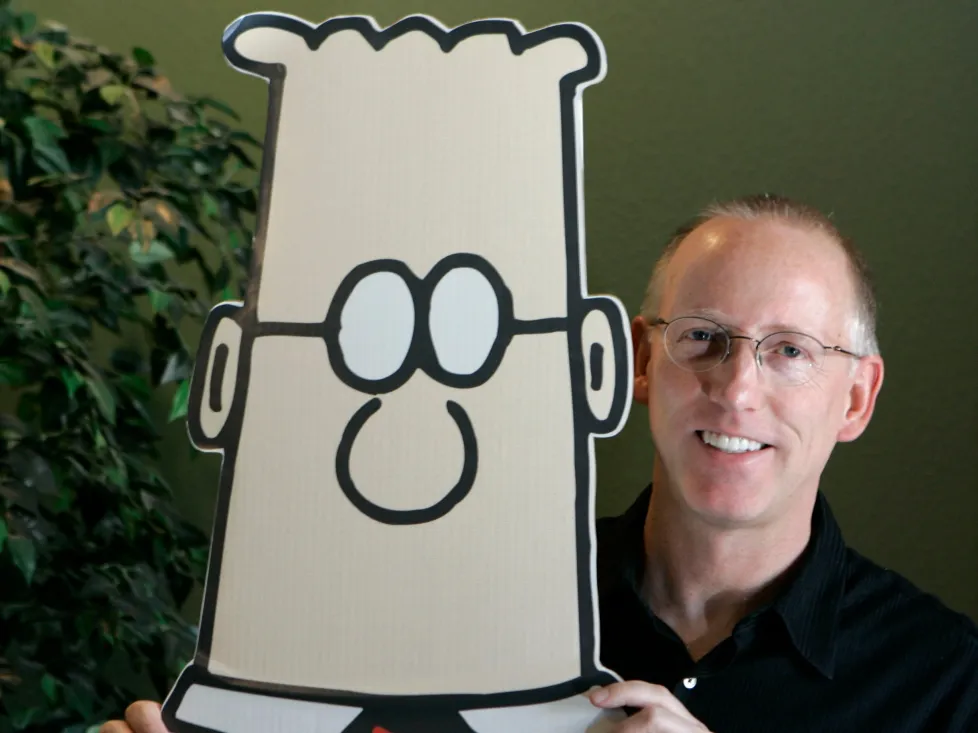
From Corporate Cubicle to Cultural Icon: The Rise of Dilbert
Born in Windham, New York, Adams pursued a conventional business path, earning an MBA from UC Berkeley and working at Pacific Bell in various technical and managerial roles. It was during these years that he observed the quirks and inefficiencies of corporate culture, which would become the foundation for "Dilbert." He started drawing the strip in 1989 while still employed, waking up at 4 a.m. to craft cartoons before his day job. According to Wikipedia, his first royalty check was a modest $368.62.
"Dilbert" struck a chord with office workers everywhere. By 1996, the strip was running in over 800 newspapers; by 2000, it had exploded to more than 2,000 publications across 57 countries, translated into 19 languages. Adams quit his corporate job in 1995 to become a full-time cartoonist, and the floodgates of wealth opened. The strip's success wasn't just about readership—it was about building a brand that could be monetized across multiple platforms.
Building a $20 Million Fortune: Syndication, Licensing, and Books
The primary engine behind Adams' net worth was syndication. Newspapers paid to publish "Dilbert," providing a steady, high-volume income stream. As Celebrity Net Worth notes, at its peak, the strip generated millions annually from syndication alone. But Adams didn't stop there. He leveraged the brand into a licensing powerhouse, with Dilbert appearing on greeting cards, calendars, office toys, and even a Ben & Jerry's ice cream flavor.
In 1996, Adams published "The Dilbert Principle," a business satire that became a massive bestseller. The book spent 60 weeks on The New York Times bestseller list and sold over two million copies. He followed it with numerous other books, including "God's Debris," "Win Bigly," and "Loserthink," which expanded his reach beyond comics into self-help, religion, and political commentary. According to Primetimer, his book sales contributed significantly to his overall wealth.

Beyond the Comic Strip: TV Deals, Failed Ventures, and Real Estate
Adams expanded his empire into television with an animated "Dilbert" series that aired on UPN from 1999 to 2000, winning a Primetime Emmy Award in 1999. While the show was short-lived, it added another revenue stream through TV rights and merchandising. Not every venture succeeded, however. In 1999, Adams launched the "Dilberito," a fortified microwave burrito, investing several million dollars before selling off the intellectual property after the product failed commercially. He later joked that the burrito's legume content caused such intense flatulence that it became a running gag.
Real estate formed a tangible part of his net worth. In April 2005, Adams purchased a 1.35-acre property in Pleasanton, California, for $1.6 million. He built an 8,300-square-foot custom home with an indoor basketball court and a tennis court. Celebrity Net Worth estimates the property's value at between $8 million and $10 million at the time of his death, representing a substantial asset in his portfolio.
Controversies and the Fall of a Newspaper Giant
Adams' career took a dramatic turn in the mid-2010s when he became a vocal political commentator. He gained attention for predicting Donald Trump's 2016 victory, attributing it to Trump's persuasion skills. This pivot brought him a new audience but also alienated many mainstream fans. In February 2023, Adams made controversial remarks on his YouTube show about Black Americans, leading hundreds of newspapers—including The Washington Post, Los Angeles Times, and USA Today—to drop "Dilbert." His distributor, Andrews McMeel Syndication, severed ties, effectively ending the strip's newspaper run.
Adams relaunched "Dilbert" as a subscription webcomic, but the damage was done. The incident underscored how quickly a personal brand could unravel, even after decades of success. Despite the controversy, Adams maintained a dedicated following through his daily livestream, "Coffee with Scott Adams," which continued until his health declined.
The Final Chapter: Health Battles and Legacy
In May 2025, Adams revealed he had been diagnosed with metastatic prostate cancer, the same form of cancer that President Joe Biden faced. He spoke openly about his illness in his final months, sharing updates with his audience. On January 13, 2026, he died peacefully at his Pleasanton home, surrounded by loved ones. His ex-wife Shelly Miles confirmed the news during a livestream, reading a final letter in which Adams expressed gratitude for his "amazing life" and announced his conversion to Christianity.
Adams' legacy is multifaceted: he was a cartoonist who defined office culture for a generation, an author who explored persuasion and philosophy, and a polarizing figure who embraced political commentary. His net worth of $20 million reflects the immense commercial success of "Dilbert" at its height, as well as his ability to diversify that success into books, media, and assets.
Scott Adams Net Worth: By the Numbers
When examining Scott Adams' financial legacy, several key figures stand out. His $20 million net worth, as reported by Celebrity Net Worth and other sources, was built on a foundation of syndication revenue, book sales, licensing deals, and real estate. The Dilbert brand generated hundreds of millions of dollars in cumulative revenue over three decades, though Adams' personal take was a fraction of that after accounting for expenses, taxes, and business costs.
His Pleasanton property, valued at up to $10 million, represented nearly half of his net worth, highlighting the importance of tangible assets in wealth accumulation. Despite the controversies that marred his later years, Adams' financial success remains a case study in monetizing intellectual property across multiple channels. He proved that a single creative idea, nurtured with discipline and expanded with strategic diversification, could create lasting wealth—even if that wealth couldn't shield him from the finality of health and mortality.
In the end, Scott Adams' net worth tells a story of innovation, risk, and resilience. From a $368 royalty check to a $20 million fortune, his journey mirrors the entrepreneurial spirit he often celebrated in his work. While his legacy may be debated, his financial achievements are undeniable—a testament to the power of a well-drawn line and a well-timed joke.