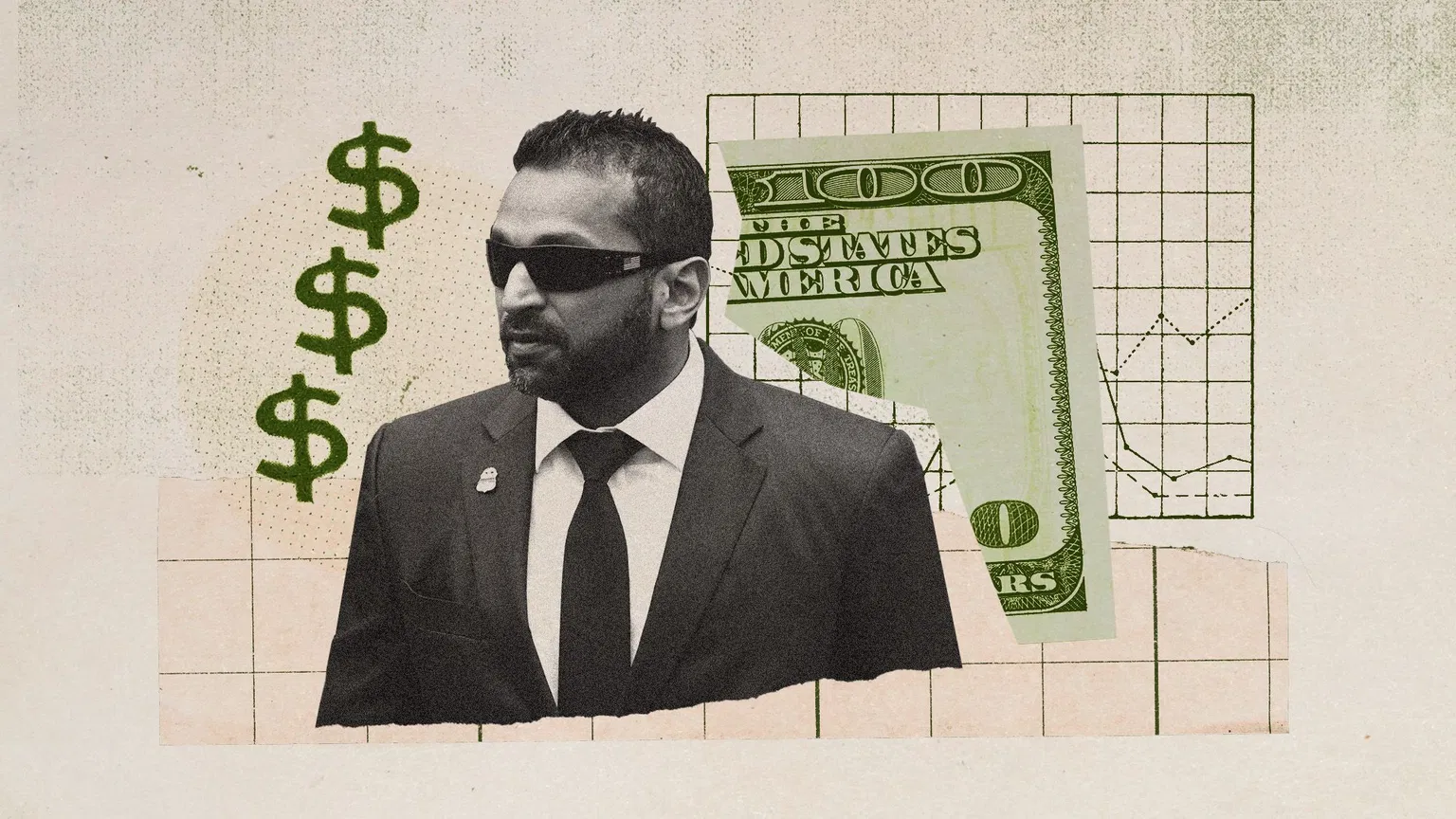
Name: Kash Patel
Age: 46
Birthday: February 25, 1980
Born: Garden City, New York, USA
Net Worth: Approximately $5.9 million
Fun Fact: He is the first person of South Asian descent to serve as FBI director.
When Kash Patel was confirmed as the ninth director of the Federal Bureau of Investigation in February 2025, he didn't just make history as the first person of South Asian descent to lead the agency—he also brought with him a financial portfolio that reflects a remarkable mid-career transformation. According to recent estimates by Business Insider and Investopedia, Patel's net worth stands at approximately $5.9 million, a fortune built through strategic consulting work, lucrative media deals, and savvy investments during his time outside government service.
From Public Defender to Power Player: Kash Patel's Unconventional Rise
Kashyap Pramod Patel's journey to the FBI directorship began far from the corridors of power. Born to Gujarati Indian immigrants in Garden City, New York, Patel graduated from the University of Richmond before earning his law degree from Pace University. He started his career as a public defender in Florida, representing indigent clients in criminal cases—a role that paid modestly but provided crucial courtroom experience.
Patel's breakthrough came when he joined the staff of House Intelligence Committee Chairman Devin Nunes during the Trump administration. There, he helped draft the controversial "Nunes Memo" that accused the FBI of surveillance abuses during the Russia investigation. This position catapulted him into Trump's inner circle, leading to roles as senior director for counterterrorism at the National Security Council and later as chief of staff to Acting Defense Secretary Christopher Miller.
These government positions, while influential, came with federal salary caps that limited his earning potential. The real financial transformation would come after January 2021, when Patel left government service and launched his consulting business, Trishul LLC.
The $2.6 Million Year: How Consulting Built Patel's Fortune
Financial disclosure forms reviewed by Business Insider reveal that 2024 was a breakout year for Patel's finances. He reported earning more than $2.6 million from consulting, paid speeches, and book deals—an astonishing sum for someone who had left government service just three years earlier.
The bulk of this income, over $2.1 million, came from his consulting firm Trishul LLC, which provides "national security, defense, and intelligence consulting" services. According to ABC News, Patel's clients included foreign governments like Qatar, domestic corporations, and even Trump Media and Technology Group, the parent company of Truth Social. This consulting work proved so lucrative that it formed the foundation of his current net worth, accounting for more than one-third of his total estimated wealth.
Beyond consulting, Patel earned significant income from media appearances and his book "The Plot Against the President," which chronicled his perspective on the Russia investigation. These ventures demonstrate how former government officials can monetize their expertise and insider knowledge—a pathway that has become increasingly common in modern American politics.
Stock Holdings and Investments: From Chinese Fashion to Cryptocurrency
Patel's wealth isn't just tied to income—it's also strategically invested across a diverse portfolio that has drawn both attention and scrutiny. His most notable holding is stock in Elite Depot, the parent company of Chinese fast-fashion giant Shein, valued between $1 million and $5 million according to his financial disclosures. This investment became controversial during his confirmation hearings, with senators questioning potential conflicts of interest given the FBI's role in investigating economic espionage.
But Patel's investment strategy extends far beyond fashion retail. He holds Bitcoin ETFs valued between $50,000 and $100,000, making him one of the highest-ranking U.S. officials with公开 cryptocurrency holdings. He also owns stock in Core Scientific, a Bitcoin mining company, and has positions in technology firms including Nvidia and Palantir. This diversified approach to investing—spanning traditional stocks, cryptocurrency, and international companies—has helped grow his wealth while introducing unique complications for his role as FBI director.
According to Wired, Patel initially resisted calls to divest his Elite Depot holdings, though he eventually agreed to sell stocks in companies like Meta Platforms and Apple if confirmed. The tension between personal investments and public responsibility highlights the complex financial landscape modern government officials must navigate.
Breaking Barriers: The Financial Cost of Making History
When the Senate confirmed Patel as FBI director on February 20, 2025, he made history as the first person of South Asian descent to lead the agency. This milestone came with financial implications—the FBI director's salary is approximately $183,000 annually, a significant reduction from his consulting income but still a substantial government paycheck.
More importantly, the position requires divestment from certain holdings and imposes strict ethics rules that limit outside income. Patel has placed his consulting business in a blind trust and agreed to forego speaking fees and book royalties during his tenure. These measures, while necessary for avoiding conflicts of interest, represent a conscious financial sacrifice for public service.
Yet the directorship also brings intangible financial benefits. Former FBI directors typically command premium fees for speaking engagements, consulting, and board positions after leaving government service. James Comey, for instance, earned millions from book deals and speeches after his controversial firing. Patel's historic appointment could position him for even greater financial opportunities once his government service concludes.
What's Next for Kash Patel's Financial Future?
Looking ahead, Patel's net worth trajectory will depend on several factors. His government salary will provide steady income but limited growth potential compared to his previous consulting work. However, his investments—particularly in volatile assets like cryptocurrency—could appreciate significantly or decline based on market conditions.
Ethics experts note that Patel's wealth management will require careful navigation. The FBI investigates economic crimes, corporate espionage, and foreign influence—all areas where his previous consulting work and investments could create perception problems. How he handles these tensions will affect both his effectiveness as director and his future earning potential.
Perhaps most importantly, Patel's financial story reflects broader trends in American politics. The revolving door between government service and lucrative private sector work has become increasingly common, raising questions about whether public officials are motivated by policy goals or financial opportunities. Patel's rapid wealth accumulation after leaving government—and his decision to return to public service despite the financial sacrifice—offers a case study in these dynamics.
The Bottom Line: Understanding Kash Patel's $5.9 Million Fortune
Kash Patel's net worth of approximately $5.9 million tells a distinctly American story of opportunity, entrepreneurship, and the monetization of government experience. Built primarily through consulting work that leveraged his national security expertise, supplemented by strategic investments and media ventures, his wealth reflects both his professional skills and the financial realities of modern political life.
As FBI director, Patel now faces the challenge of separating his personal finances from his public duties—a task made more complex by investments in Chinese companies and cryptocurrency. Yet his financial journey also demonstrates how immigrants and their children can achieve remarkable success in American institutions, breaking barriers while building substantial wealth.
Whether Patel's net worth grows during his government service remains to be seen, but his current financial position places him among the wealthiest individuals ever to lead the FBI. His story offers insights into how expertise, connections, and strategic risk-taking can translate into multimillion-dollar fortunes in today's political landscape—and how those fortunes must be managed when returning to positions of public trust.