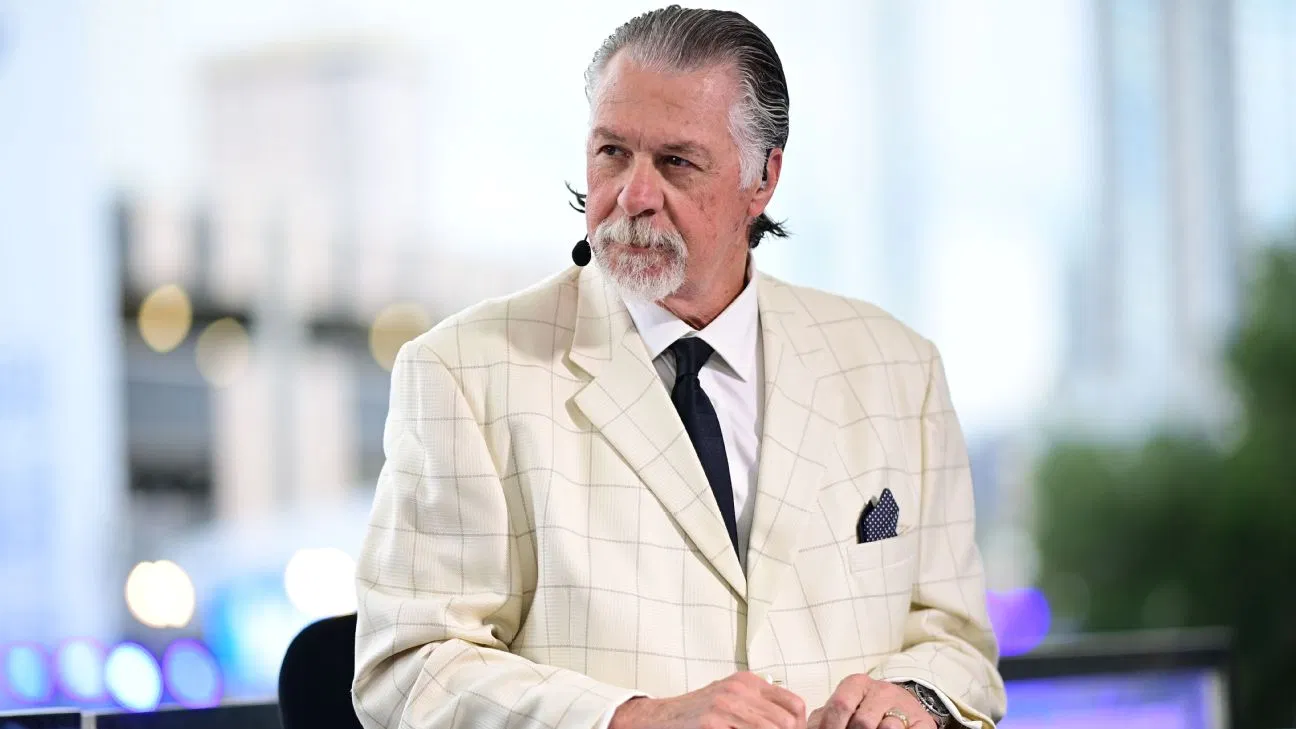
Name: Barry James Melrose
Age: 70
Birthday: July 15, 1956
Born: Kelvington, Saskatchewan, Canada
Net Worth: Approximately $16 million
Fun Fact: Melrose played himself in the 1999 Russell Crowe hockey film Mystery, Alaska
Barry Melrose was a Canadian-American former NHL player, head coach, and longtime ESPN hockey analyst who had a net worth of $16 million at the time of his death on September 9, 2026. Melrose, who was 70, spent more than five decades in professional hockey, first as a hard-nosed, fight-ready defenseman, then as a championship-winning coach, and finally as one of the most recognizable television voices in the sport. His wife, Cindy, confirmed his death to ESPN, closing a career that carried him from a family farm in rural Saskatchewan to the 1993 Stanley Cup Final and into millions of North American living rooms. For many fans, Melrose simply was hockey on television, a charismatic, mustachioed ambassador whose enthusiasm made the game easy to understand and fun to watch.
From a Saskatchewan Farm to the NHL
Barry James Melrose was born on July 15, 1956, in Kelvington, Saskatchewan, and grew up on a farm outside the small prairie community, raised by his parents Norrie and James. Hockey was embedded in his extended family: Melrose was a cousin of future NHL players Wendel Clark and Joe Kocur and minor-league forward Kerry Clark. Rather than developing into an offensive star, Melrose became a physical defenseman known for toughness and a willingness to fight. After two seasons with the Kamloops Chiefs in junior hockey, the Montreal Canadiens selected him 36th overall in the 1976 NHL Draft, but Melrose chose instead to sign with the Cincinnati Stingers of the rival World Hockey Association. He played 178 WHA games over three seasons, recording five goals, 27 assists, and 343 penalty minutes, and during his final season in Cincinnati he was teammates with a young Mark Messier.
When the WHA folded, Melrose moved into the NHL, suiting up for the Winnipeg Jets, Toronto Maple Leafs, and Detroit Red Wings. Across 300 NHL regular-season games, he tallied 10 goals, 23 assists, and 728 penalty minutes, and he appeared in seven additional playoff games. He finished his playing days with the Adirondack Red Wings of the AHL in 1986-87 before retiring and immediately turning to coaching.
A Coaching Career That Paid Off
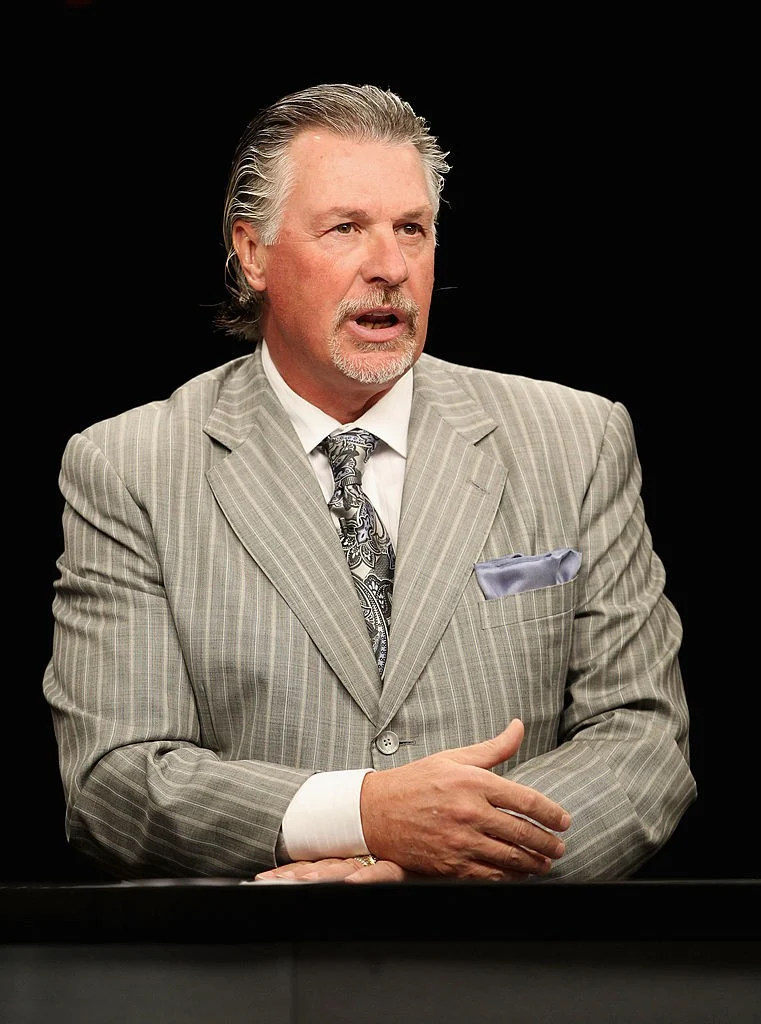
Melrose's move behind the bench delivered immediate results and his first real paychecks. In his debut season as a head coach, he guided the Medicine Hat Tigers to the 1988 Memorial Cup championship. After a stop with the Seattle Thunderbirds, he took over the Adirondack Red Wings, where he won the 1992 Calder Cup as AHL champion and helped establish Glens Falls, New York, as his longtime home. That title put him on the NHL's radar, and in June 1992 the Los Angeles Kings hired the 35-year-old to coach a team built around the greatest player in hockey history, Wayne Gretzky. Melrose's first season became his signature achievement: the Kings reached the 1993 Stanley Cup Final for the first time in franchise history, ultimately falling to the Montreal Canadiens in five games. After two losing seasons, the Kings fired him late in the 1994-95 campaign, and his overall NHL head-coaching record finished at 84-108-29.
Coaching also laid the financial foundation of Melrose's fortune. The Kings gave him a four-year contract worth roughly $1 million, about $250,000 per season, which contemporary reporting described as the richest deal ever handed to a first-time NHL head coach. After the Stanley Cup run, Los Angeles renegotiated, bumping his salary to nearly $600,000 the following season with escalators that could have reached around $800,000 annually. His most lucrative coaching contract came more than a decade later, when the Tampa Bay Lightning hired him in 2008 on a reported three-year, $6 million deal worth $2 million per season. Tampa Bay fired him after only 16 games, and the financial terms of his departure were never made public.
The ESPN Years: Hockey's Most Recognizable Voice
After leaving the Kings, Melrose found the role for which millions of fans knew him best. He had done playoff television work for ESPN before becoming a full-time analyst in 1996, and he would spend roughly 27 years with the network across two stints. As the lead studio analyst on NHL 2Night alongside Ray Ferraro and host John Buccigross, Melrose became synonymous with hockey coverage during an era when ESPN carried relatively little NHL programming. His ESPN salary was never publicly disclosed, but the job provided the longest and most stable income-producing phase of his career. He also joined NHL Network as a contributor in 2011 and supplemented his earnings through corporate appearances, speaking engagements, and acting. Melrose played himself in the 1999 hockey film Mystery, Alaska, starring Russell Crowe, and appeared in Slap Shot 2: Breaking the Ice and the sitcom Spin City. He even co-owned the Adirondack Frostbite of the United Hockey League with ESPN colleague Steve Levy, an investment Levy later joked had cost him about $100,000.

Parkinson's Diagnosis, Retirement and Death
On October 10, 2023, ESPN announced that Melrose had been diagnosed with Parkinson's disease and was stepping away to focus on his health and family. The news prompted an outpouring of tributes from across the hockey world, with Wayne Gretzky praising Melrose's role in promoting the sport and NHL Commissioner Gary Bettman highlighting his infectious personality. Melrose died on September 9, 2026, at the age of 70, after living with Parkinson's disease since at least his public diagnosis three years earlier. Former Kings defenseman Rob Blake remembered him as a major personality ideally suited to both coaching and television, while longtime colleague John Buccigross called Melrose his best friend at ESPN and a big-brother figure.
A $16 Million Net Worth and a Lasting Legacy
At the time of his death, Barry Melrose had a net worth of approximately $16 million. That fortune was assembled across three distinct careers: a modest NHL playing career in the pre-salary-cap era, a coaching run that included a near-million-dollar Kings contract and a $6 million Lightning deal, and nearly three decades as the face of hockey at ESPN. Melrose is survived by his wife Cindy and their two sons, Tyrell and Adrien. From a farm outside Kelvington, Saskatchewan, to the Stanley Cup Final and television's biggest sports network, Melrose turned grit, charisma, and an abiding love of hockey into a rich legacy, and by any measure, one of the most memorable careers the sport has ever produced.