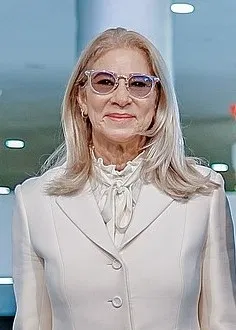
Name: Cilia Flores
Age: 69
Birthday: October 15, 1956
Born: Tinaquillo, Venezuela
Net Worth: Approximately $2-5 million
Fun Fact: She was the first woman to serve as President of the National Assembly of Venezuela, holding the position from 2006 to 2011.
As the First Lady of Venezuela and one of the country's most influential political figures, Cilia Flores has built a career that spans law, politics, and national leadership. Married to President Nicolás Maduro, Flores has navigated Venezuela's turbulent political landscape for decades, accumulating both power and wealth through her various public service roles.
From Humble Beginnings to Political Powerhouse
Cilia Adela Flores was born on October 15, 1956, in the small town of Tinaquillo, Venezuela. Growing up in modest circumstances, she pursued law at the Central University of Venezuela, where she developed the skills that would later define her career. Her early legal work focused on labor disputes, but her trajectory changed dramatically when she joined the defense team for Hugo Chávez following his failed 1992 coup attempt. Flores played a crucial role in securing Chávez's release from prison in 1994, establishing a relationship that would propel her into the highest echelons of Venezuelan politics.
The Rise of Venezuela's First Lady
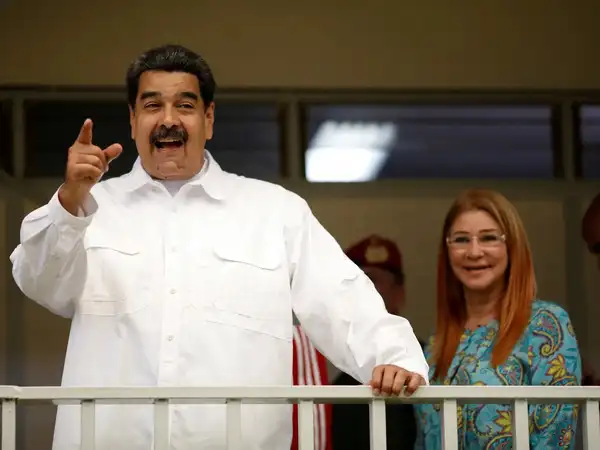
Flores entered electoral politics in 2000 when she was elected as a deputy in Venezuela's National Assembly. Her rise within the United Socialist Party of Venezuela (PSUV) was rapid, and in August 2006, she made history by becoming the first woman to serve as President of the National Assembly, replacing her future husband Nicolás Maduro when he became Minister of Foreign Affairs. During her five-year tenure in this powerful position, Flores oversaw legislative agendas and budgets worth billions, while also swearing in Hugo Chávez for his presidential term in 2007.
Her political career continued to ascend as she served as Attorney General of Venezuela from 2012 to 2013, a position that gave her significant influence over the country's legal system. When Maduro won the controversial 2013 presidential election following Chávez's death, Flores assumed the role of First Lady—a position that had been vacant since 2003. Unlike many first ladies who remain in the background, Flores maintained an active political presence, winning election to the National Assembly again in 2015 and later serving in the Constituent Assembly created in 2017.
Building Wealth Through Public Service
Cilia Flores's estimated net worth of $2-5 million has been accumulated primarily through decades of public service salaries. As President of the National Assembly from 2006 to 2011, she earned a substantial government salary while overseeing one of Venezuela's most important institutions. Her subsequent roles as Attorney General, First Lady, and National Assembly deputy all came with government compensation packages, housing allowances, travel reimbursements, and other benefits that contributed to her financial standing.
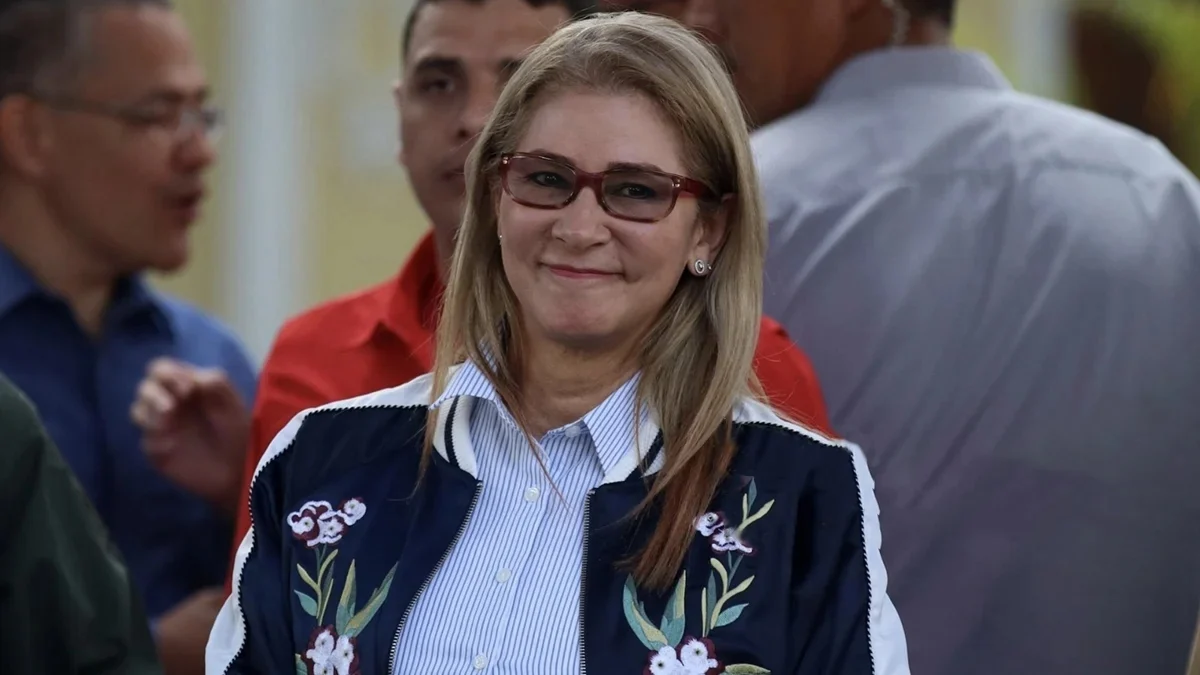
According to financial analysts, Flores's official salary as First Lady was approximately $10,000 annually in Venezuela's hyperinflated economy, though this modest figure represents only a fraction of her total compensation package. Critics have argued that her family's extensive connections within the Venezuelan government have provided additional financial opportunities, though these claims remain difficult to verify given Venezuela's limited financial transparency.
Controversies and International Sanctions
Flores's wealth and influence have not come without controversy. In 2015, two of her nephews—Efraín Antonio Campos Flores and Francisco Flores de Freitas—were arrested in Haiti and later convicted in the United States for attempting to transport 800 kilograms of cocaine to New York. The "Narcosobrinos" scandal raised questions about potential connections between Venezuela's political leadership and international drug trafficking, though Flores consistently denied any knowledge or involvement.
In September 2018, the United States Treasury Department imposed sanctions on Flores for what it described as "plundering Venezuela's resources" and "facilitating corruption." These sanctions froze any U.S. assets she might have held and prohibited American entities from doing business with her. Canada followed with similar sanctions, citing her role in what they called Venezuela's "illegitimate and anti-democratic" government. Maduro responded defiantly to his wife's sanctions, declaring, "You don't mess with Cilia. You don't mess with family."
Recent Developments and Current Status
The beginning of 2026 brought dramatic developments in Flores's story when U.S. President Donald Trump announced that American forces had captured both Maduro and Flores during military strikes in Venezuela. While Venezuelan authorities demanded "immediate proof of life" and condemned the operation as illegal, the incident focused international attention on the couple's fate and their accumulated wealth during years in power.
Despite these dramatic events, questions about Flores's net worth continue to surface, particularly as Venezuela's economic crisis deepens with GDP contraction exceeding 10% annually and over 90% of the population living in poverty. The stark contrast between the estimated $2-5 million fortune of Venezuela's First Lady and the dire economic circumstances of ordinary Venezuelans remains a point of contention both domestically and internationally.
The Bottom Line on Cilia Flores's Fortune
Cilia Flores's journey from a small-town lawyer to Venezuela's First Lady represents one of the most remarkable political ascents in recent Latin American history. Her estimated net worth of $2-5 million, accumulated through salaries and benefits from decades of public service, places her among Venezuela's wealthy elite, even as the country she helps lead faces unprecedented economic challenges. While her supporters view her as a dedicated public servant who broke gender barriers in Venezuelan politics, her critics point to sanctions and scandals as evidence of problematic wealth accumulation. Regardless of perspective, Cilia Flores's financial standing remains intrinsically tied to Venezuela's turbulent political landscape—a testament to how power and prosperity intersect in one of the world's most complex and controversial governments.