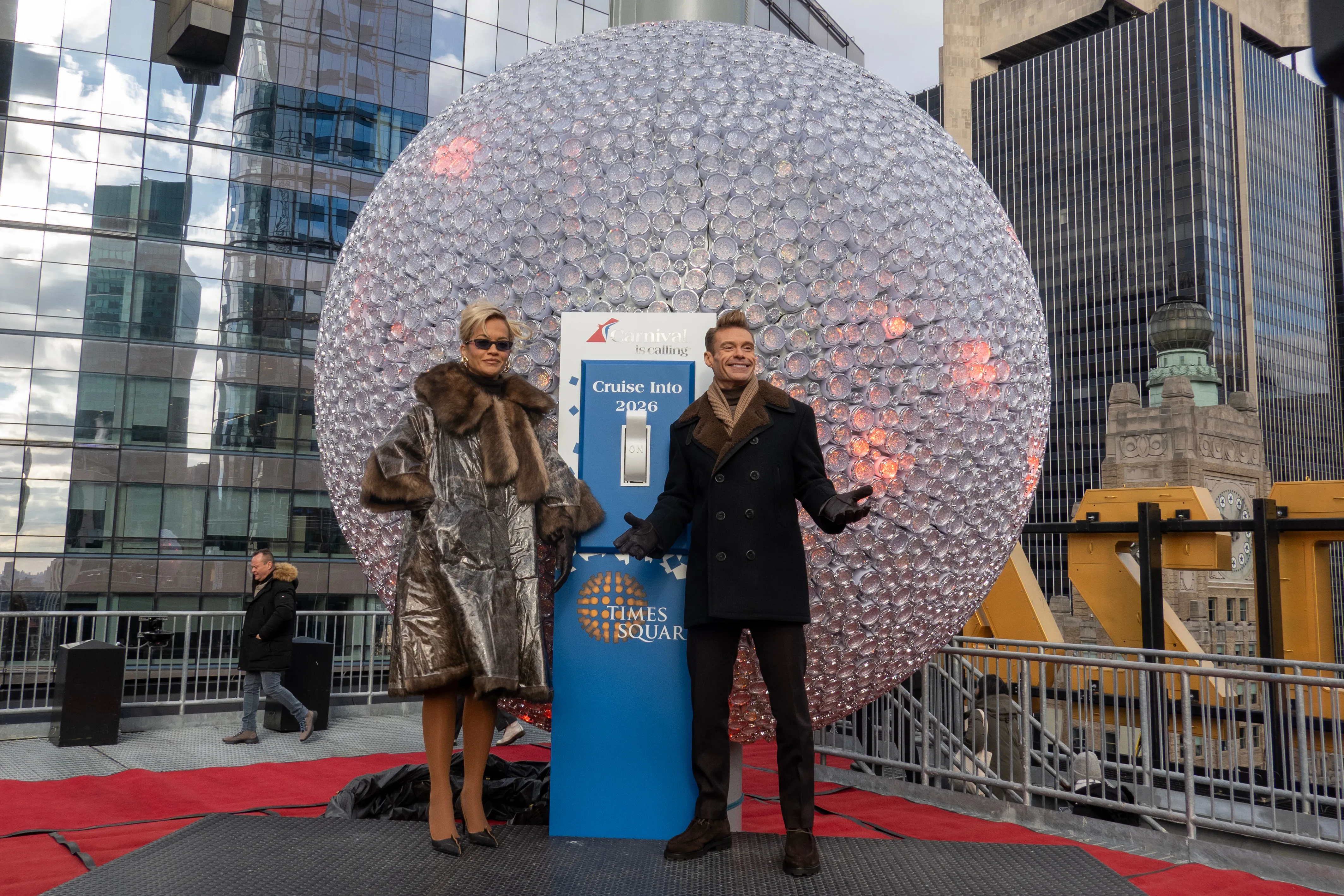
As the clock strikes midnight on December 31st each year, a global wave of celebrations sweeps across the planet, time zone by time zone, marking the transition into a new year. The 2026 New Year's countdown saw over a million people gathered in New York's Times Square, fireworks illuminating Sydney Harbour, and Atlanta replacing its traditional Peach Drop with a high-tech drone display. But how does this worldwide countdown actually work? From the first celebrations in the Pacific islands of Kiribati to the final moments in remote Baker Island, the New Year's countdown is a carefully timed global phenomenon that combines ancient traditions with modern technology.
How the Global Countdown Unfolds: A Time Zone by Time Zone Celebration
New Year's Eve isn't a single moment—it's a 24-hour rolling event that follows the Earth's rotation through its time zones. The first inhabited place to welcome the new year is Kiritimati (Christmas Island) in Kiribati, located in the UTC+14 time zone. As reported by the BBC, one tourist there marked the moment "on a beach with no satellites, no signs of human life, complete darkness and countless crabs." From there, the celebration moves westward through the major cities of Auckland, Sydney, Tokyo, Beijing, Dubai, Moscow, Paris, London, and finally across the Atlantic to the Americas.
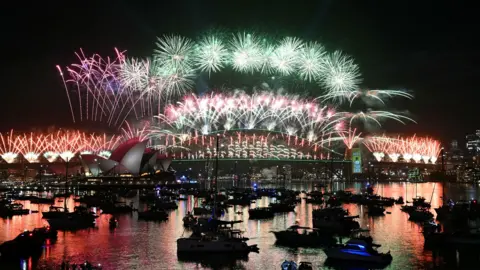
New Zealand was among the first nations to celebrate 2026's arrival, with a countdown at the Sky Tower in Auckland followed by fireworks, as documented by The New York Times. Sydney's famous harbour fireworks display, watched by millions globally, marked the next major milestone. The celebrations continue across Asia, Europe, and Africa before reaching the Americas, where cities like Rio de Janeiro, New York, and Los Angeles host their own iconic events.
Times Square's Iconic Ball Drop: The History Behind the Tradition
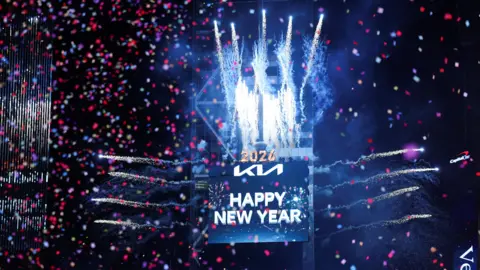
The most famous New Year's countdown tradition—the Times Square ball drop—has been captivating audiences for over a century. According to NPR's historical analysis, the tradition began in 1907 when New York Times owner Adolph Ochs needed a replacement for the banned fireworks display. Inspired by maritime time balls that were dropped daily in ports to help sailors synchronize their navigational instruments, the paper's chief electrician Walter Palmer designed a 700-pound iron and wood ball covered with 100 light bulbs.
The ball has undergone significant transformations over the decades. It was replaced with a 400-pound iron ball in 1940, then a 150-pound aluminum version in 1955. From 1981 to 1988, it was transformed into a giant apple with red lights and a green stem for the "I Love New York" campaign. The current ball, introduced in 2007 for the tradition's centennial, weighs 11,875 pounds and features 32,256 LED lights and 2,688 Waterford crystal triangles.
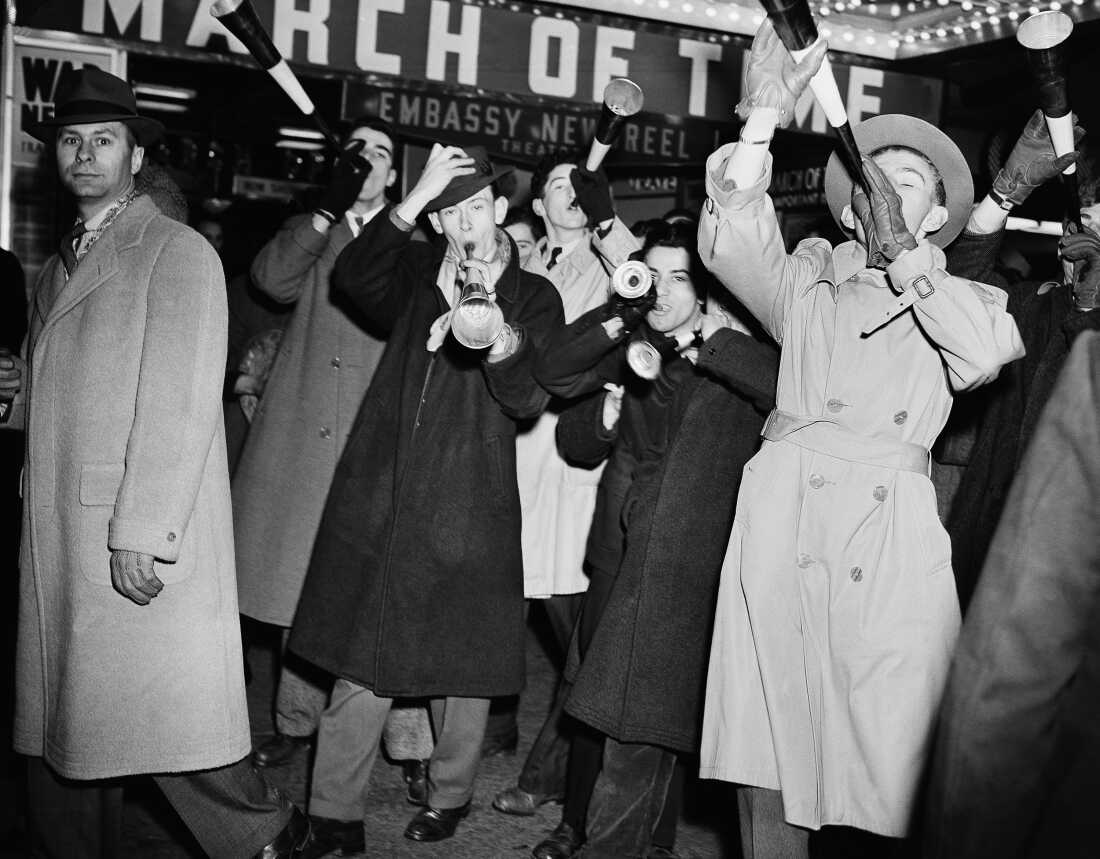
Interestingly, the 10-second countdown that now defines the moment wasn't originally part of the tradition. NPR reports that television announcers began counting down in the 1960s, but the Times Square crowd didn't join in until 1979. The ball drop has only been canceled twice—in 1942 and 1943 due to World War II lighting restrictions—though crowds still gathered quietly both years.
From Peach Drops to Drone Shows: How Cities Are Reinventing New Year's
While Times Square sets the standard, cities across America have developed their own unique countdown traditions—and some are now evolving with technology. Atlanta's long-running Peach Drop, which began in 1989, has been replaced for 2026 by "Countdown Over ATL," a citywide celebration featuring drone displays and synchronized fireworks. According to WABE Atlanta, Mayor Andre Dickens announced the change to promote equity and accessibility, stating, "We cannot wait for residents and visitors to experience several fireworks displays that will light up the night across Atlanta."
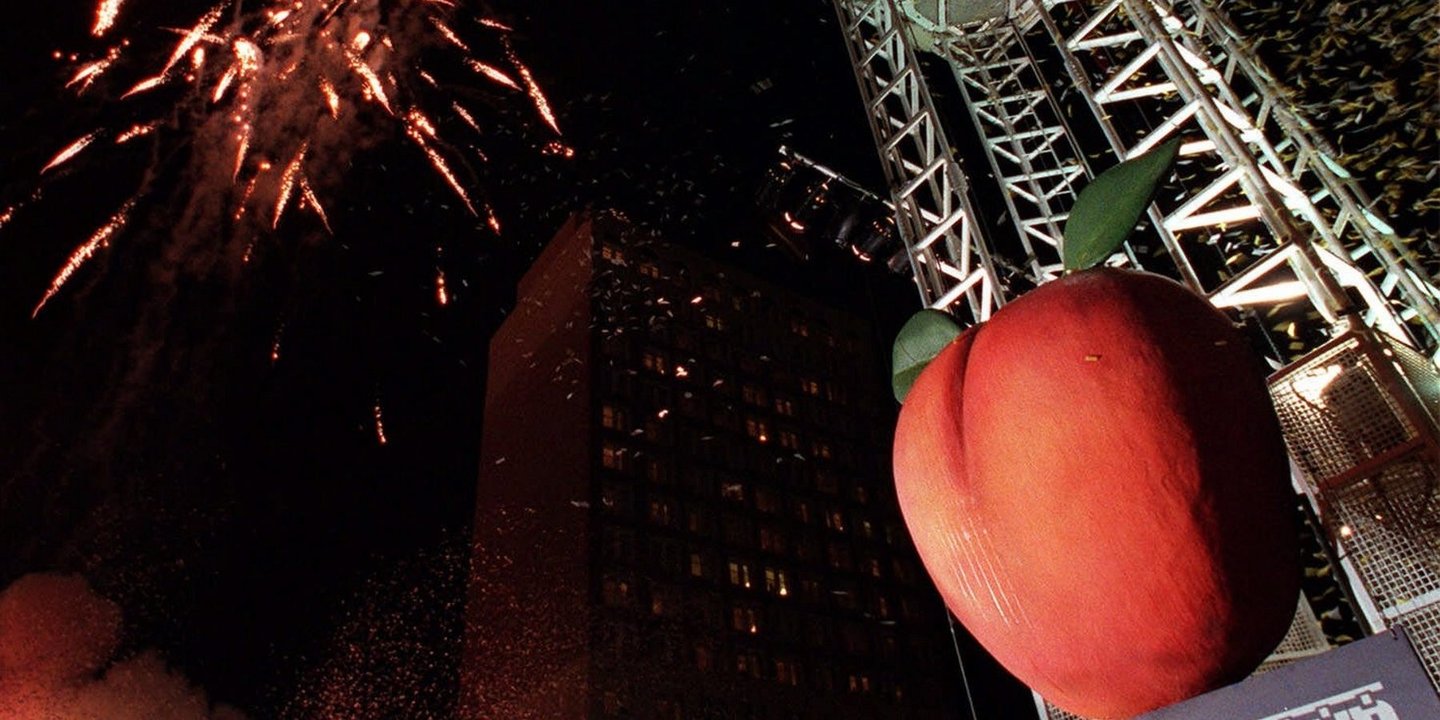
The 12-minute event includes a digital drone peach visible across downtown and Midtown Atlanta, along with fireworks launched from multiple locations. City officials hope the distributed celebration will improve public safety by reducing downtown crowd congestion. The Peach Drop had become sporadic in recent years, canceled in 2020 and 2021 due to the COVID-19 pandemic and in 2024 due to funding priorities.
Other cities have long embraced quirky countdown objects: Miami drops a giant orange, Pittsburgh drops a pickle, and Raleigh drops a giant acorn. Television broadcasts have also adapted, with ABC's "Dick Clark's New Year's Rockin' Eve" adding its first-ever Central Time Zone countdown from Chicago for 2026, allowing viewers in earlier time zones to celebrate at their local midnight.
The Science of Time Zones: Why New Year Arrives at Different Moments
The global New Year countdown is fundamentally a demonstration of how time zones work. Earth is divided into 24 time zones, each approximately 15 degrees of longitude wide, corresponding to one hour of the day. When it's midnight in Kiribati (UTC+14), it's still 5 a.m. on December 31st in New York (UTC-5). This time difference creates the rolling celebration effect that lasts an entire day.
The International Date Line, which generally follows the 180° meridian, determines where the calendar advances. However, political and economic considerations have created anomalies. Kiribati moved its eastern islands across the date line in 1994 to have all its territory on the same day, making it the first country to welcome the new year. Similarly, Samoa jumped across the date line in 2011 to align with trading partners Australia and New Zealand, switching from being among the last to among the first celebrants.
The last inhabited places to celebrate are islands in the UTC-12 time zone, such as Baker Island and Howland Island (both uninhabited), and American Samoa (UTC-11). For those keeping track globally, the complete New Year's transition takes about 26 hours from the first celebrations in Kiribati to the final moments in the remote Pacific islands.
What's Next for New Year Celebrations? Technology and Trends
New Year celebrations continue to evolve with technology and changing social priorities. Drone displays, like Atlanta's new show, are becoming more common as they offer environmental advantages over traditional fireworks—less pollution, noise, and fire risk. Cities from Sydney to Dubai have incorporated drones into their shows, creating intricate aerial animations that would be impossible with pyrotechnics alone.
Livestreaming has transformed New Year's into a truly global experience. According to Mashable, millions now watch celebrations worldwide through platforms like YouTube, Facebook, and dedicated network streams. This has allowed people to experience multiple countdowns—starting with New Zealand's, then Australia's, Asia's, Europe's, and finally the Americas'—all from their living rooms.
Environmental concerns are also shaping celebrations. Several cities have reduced fireworks in favor of light shows, while others use biodegradable confetti. The Times Square ball itself became more energy-efficient with its 2007 LED upgrade, reducing power consumption by approximately 50% compared to incandescent bulbs.
Looking ahead to 2027 and beyond, expect more interactive elements, augmented reality experiences, and personalized digital countdowns. Yet despite technological advances, the core appeal remains unchanged: a shared moment of anticipation, reflection, and hope that connects people across cultures and time zones.
The Bottom Line: Key Points to Remember
• New Year's celebrations follow Earth's rotation through 24 time zones, starting in Kiribati (UTC+14) and ending in Baker Island (UTC-12).
• The Times Square ball drop tradition began in 1907, inspired by maritime time balls, and has only been canceled during World War II.
• The 10-second countdown became part of the tradition in the 1960s on TV, with crowds joining in 1979.
• Atlanta replaced its Peach Drop (started 1989) with a drone and fireworks show for 2026 to increase accessibility.
• Over 1 million people attended the 2026 Times Square celebration, while millions more watched globally via livestreams.
• Technology continues to transform celebrations with drone displays, LED lighting, and worldwide streaming, but the fundamental human desire to mark new beginnings remains constant.
Whether you're watching the ball drop in Times Square, a drone show in Atlanta, or fireworks over Sydney Harbour, you're participating in a global ritual that connects humanity across borders and time zones. The countdown to the new year is more than just numbers ticking backward—it's a worldwide expression of hope, renewal, and shared humanity.