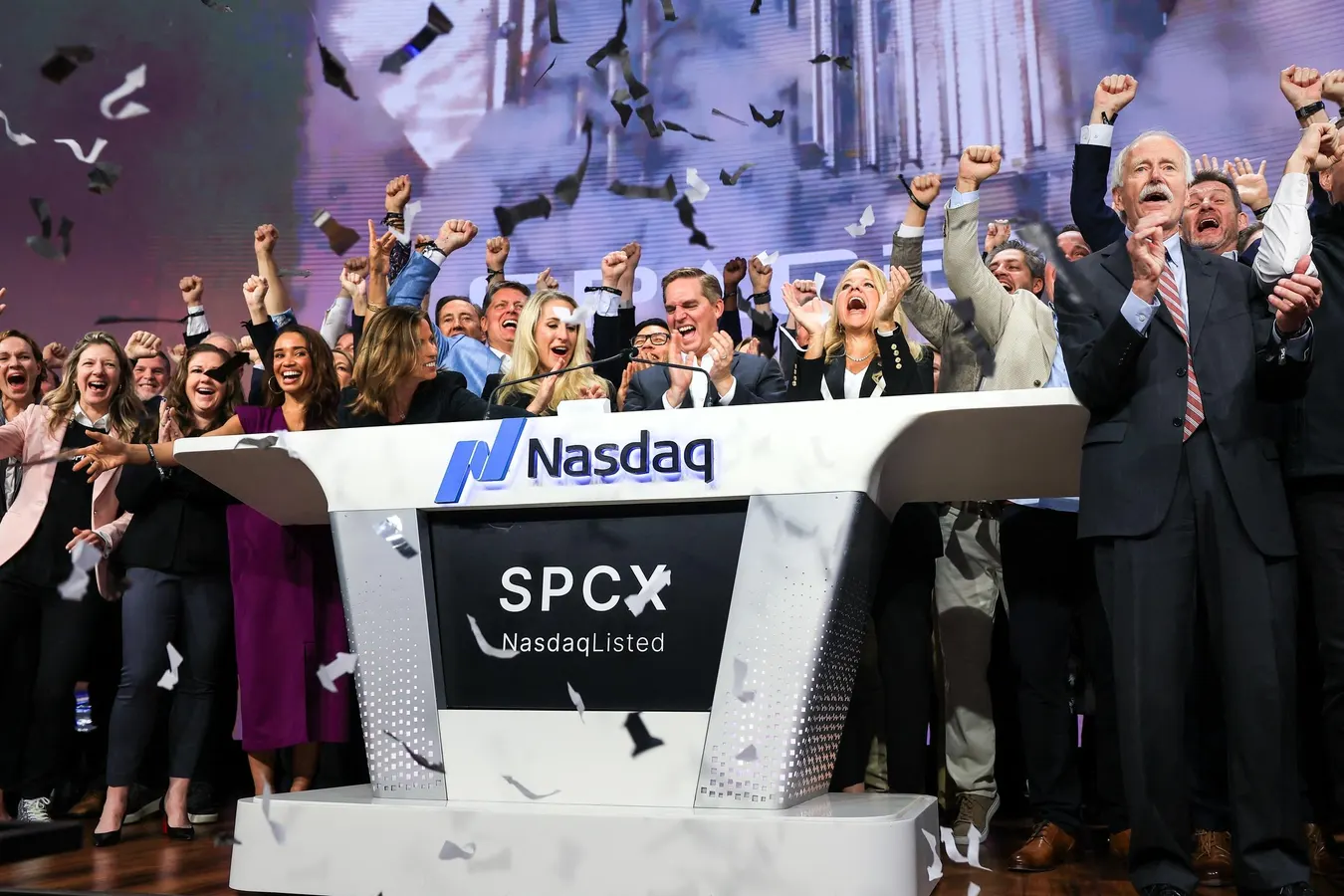
SpaceX made financial history on June 12, 2026, when it listed on the NASDAQ under the ticker SPCX in what is now officially the largest initial public offering of all time. The Elon Musk-led space exploration company priced its IPO at $135 per share, raising a staggering $75 billion and instantly becoming one of the most valuable publicly traded companies on the planet. For investors who had been watching and waiting for years, the moment finally arrived — and the stock wasted no time delivering fireworks.
How SpaceX's Record-Breaking IPO Unfolded
SpaceX set the stage on June 2, 2026, when news broke that the company planned to price its IPO at $135 per share, targeting a $75 billion raise — a figure that would dwarf every previous IPO in market history. The company's valuation of roughly $1.77 trillion immediately placed it among the world's largest companies by market cap, alongside tech giants like Apple, Microsoft, and Nvidia.
When trading opened on June 12, SPCX shares debuted at $150 per share, a strong 11% premium above the IPO price. Demand was overwhelming. The stock surged throughout the day, hitting an intraday high of $176.52 before closing at $160.95 — a 19.2% gain on its first day alone. According to NPR, the stock "skyrocketed on high demand," with trading volumes reflecting a frenzy of buying from both institutional and retail investors.
The IPO was unique in its accessibility. Unlike many tech mega-IPOs that primarily benefit institutional investors, SpaceX made a concerted effort to include smaller investors. As reported by the Associated Press via Syracuse.com, Fidelity allowed clients with as little as $2,000 in their brokerage accounts to participate — a stark contrast to the typical Wall Street playbook. Goldman Sachs and Morgan Stanley served as the lead underwriters for what Bloomberg would later call "the most anticipated IPO in a generation."
Timeline: From IPO Pricing to a $2.5 Trillion Giant
The speed at which SpaceX's valuation has grown is nothing short of extraordinary. Here's how the key events played out:
- June 2, 2026: Reuters exclusively reports SpaceX plans to set IPO price at $135 per share, targeting a record $75 billion raise.
- June 11, 2026: SpaceX confirms the $135 IPO price, formally setting its valuation at $1.77 trillion — making it the largest IPO in history by capital raised.
- June 12, 2026 (IPO Day): SPCX opens at $150, surges to an intraday high of $176.52, and closes at $160.95. Elon Musk becomes the world's first trillionaire. Market cap surpasses $2.1 trillion.
- June 15, 2026 (First Monday): SPCX continues its rally, climbing to new highs around $192.50 per share, pushing the company's market capitalization above $2.5 trillion.
The Motley Fool noted that SpaceX's first-day gain of 19% placed it among the most successful large-cap IPOs in recent memory, particularly given the sheer size of the offering. For context, the previous record-holder was the Saudi Aramco IPO in 2019, which raised $29.4 billion — less than half of SpaceX's haul.
What SpaceX's Public Listing Means for Investors
The decision to go public marks a dramatic shift for SpaceX, which had been a private company for 24 years since its founding in 2002. The company now faces the scrutiny of public markets, quarterly earnings reports, and a new base of shareholders ranging from pension funds to retail traders.
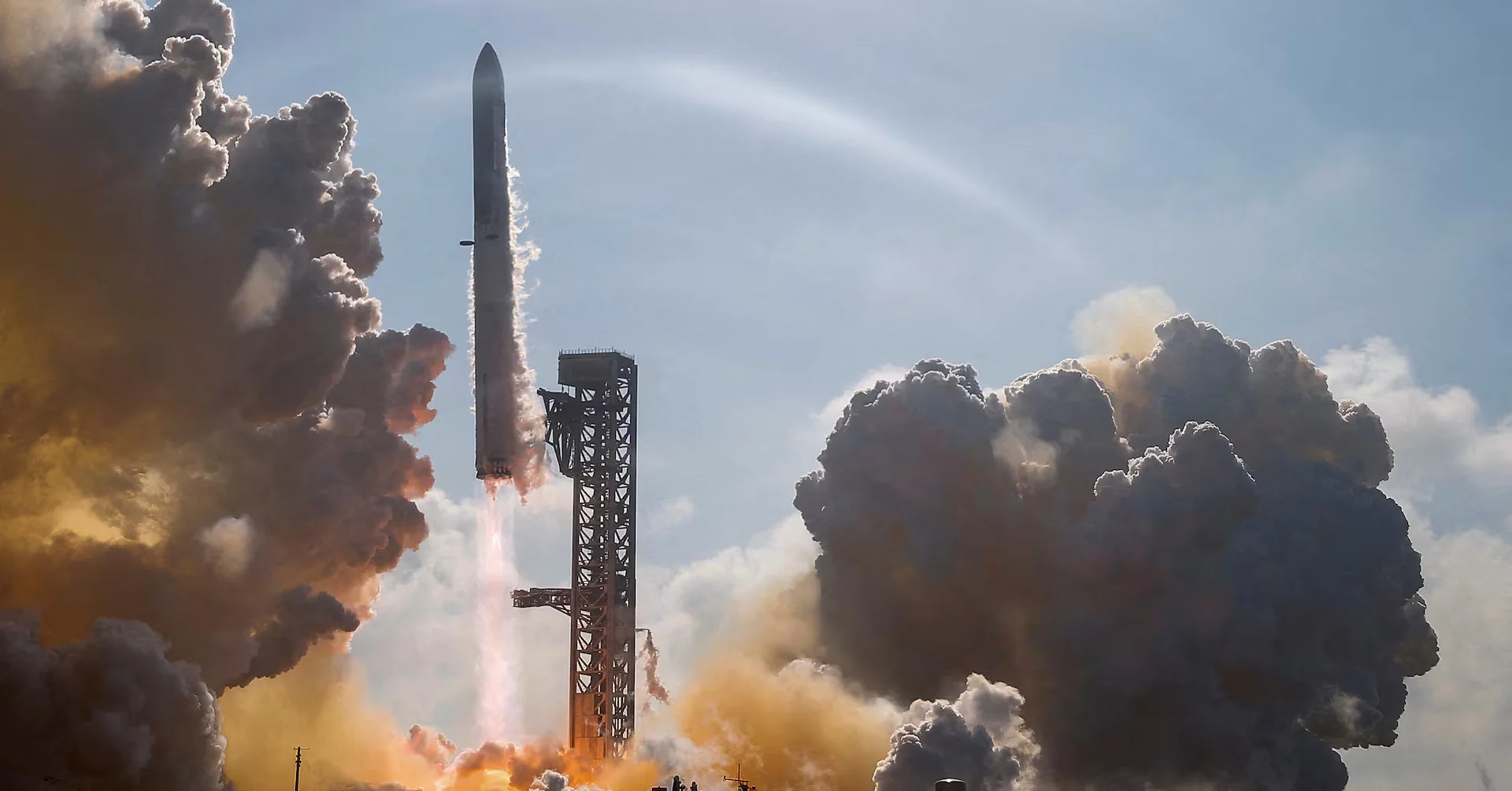
At its current valuation of roughly 265 times 2025 earnings (as reported by Barron's), SPCX trades at a premium that reflects enormous growth expectations. The valuation is underpinned by SpaceX's dominant position in several high-growth markets: commercial satellite launches, NASA and Pentagon contracts, the Starlink satellite internet constellation, and the Starship deep-space program.
"SpaceX is not just a rocket company — it's a broadband provider, a defense contractor, and potentially the key to interplanetary travel," noted analysts covering the stock. Starlink alone, which now has over 4 million subscribers globally, is projected to generate substantial recurring revenue that could justify the premium valuation over time.
Yahoo Finance estimated that a $5,000 investment in SPCX at the IPO price could be worth significantly more if the company reaches a $2 trillion market cap within five years — a milestone it actually surpassed on day one. With the stock now trading above $190, early IPO participants are already sitting on gains of more than 40% in just a few days.

Where SPCX Stands Now — And the Risks Ahead
As of the latest trading session, SPCX shares are trading near $192.50 with a 52-week range of $149.34 to $193.00. The stock has been one of the most actively traded names on the NASDAQ since its debut, with massive volume reflecting intense interest from all types of investors.
However, potential investors should be aware of the risks. SpaceX operates in capital-intensive industries where delays are common and competition is intensifying. Rivals including Blue Origin, Rocket Lab, and United Launch Alliance are all vying for market share. The company's high valuation leaves little room for error — any misstep in Starship development or a slowdown in Starlink subscriber growth could trigger a sharp correction.
Additionally, Musk's involvement introduces a unique set of risks. His management of other companies, including Tesla and X (formerly Twitter), has occasionally created volatility. As a major shareholder and public figure, his statements could move SPCX shares significantly.
What Happens Next: The Road Ahead for SpaceX Stock
Looking forward, analysts are closely watching several catalysts. The upcoming Starship orbital test flights, continued Starlink expansion into new international markets, and potential Department of Defense contracts could all drive the stock higher. Some analysts project that if Starship achieves full reusability and begins generating revenue, SpaceX's addressable market expands dramatically.
Institutional investors are also expected to increase their positions as SPCX is added to major indices like the S&P 500 and NASDAQ-100 over the coming months. Index inclusion typically drives additional buying from passive funds, providing a potential tailwind for the stock.
The Motley Fool's analysis suggests that while past performance doesn't guarantee future results, SpaceX's unique position at the intersection of space exploration, defense, and telecommunications makes it a one-of-a-kind investment opportunity — but one that comes with equally unique risks.
The Bottom Line: Key Points to Remember
- SpaceX (SPCX) completed the largest IPO ever on June 12, 2026, raising $75 billion at $135/share.
- The stock surged 19% on day one and has continued climbing, now trading near $192.50 with a market cap above $2.5 trillion.
- Retail investors gained access through brokers like Fidelity with minimums as low as $2,000.
- Key growth drivers include Starlink, Starship, and government contracts — but the high valuation leaves little margin for error.
- Elon Musk became the world's first trillionaire as a result of the IPO, and SPCX is expected to be added to major indices soon.