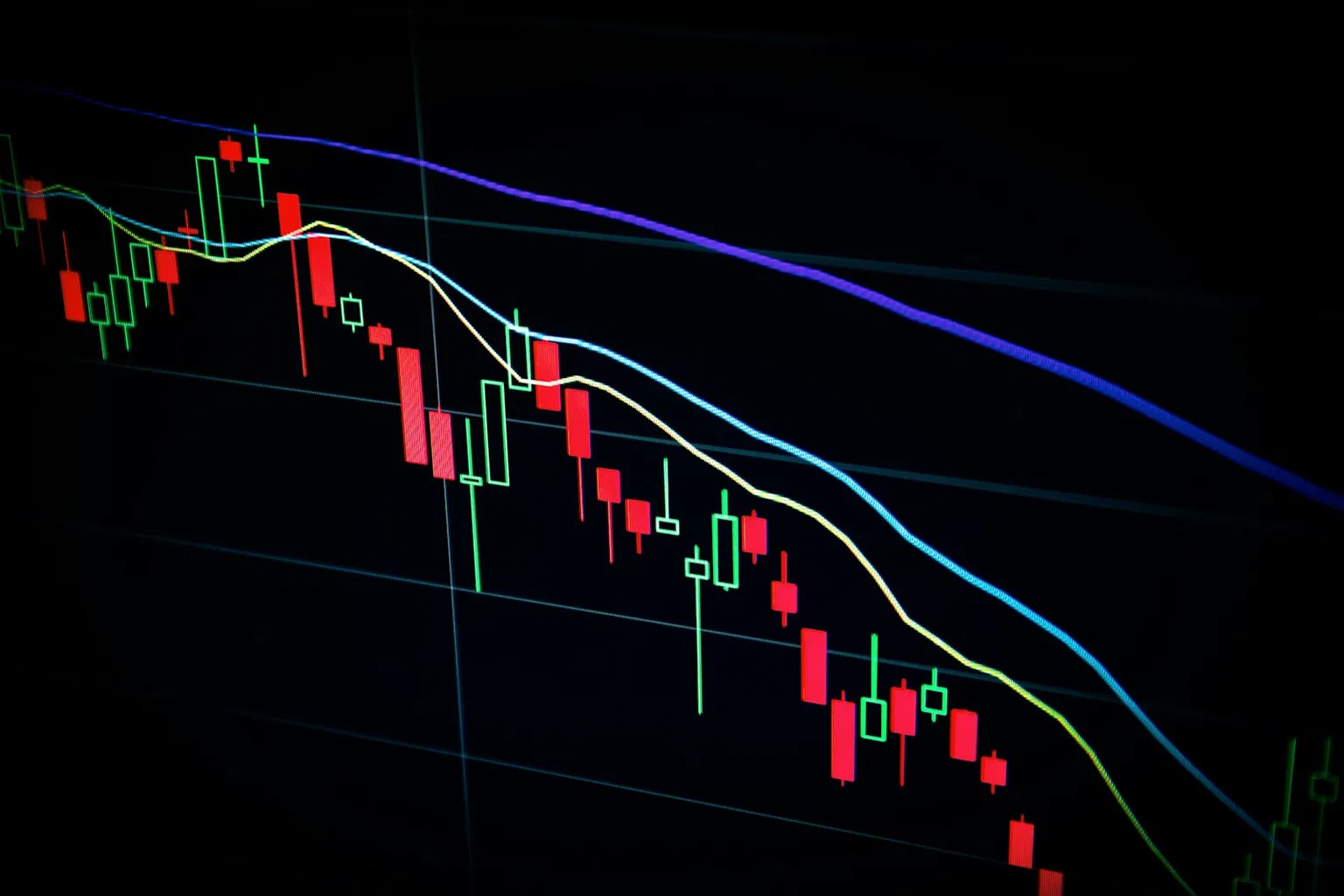
Wall Street opened the week on the back foot Monday, September 28, as a fresh spike in oil prices and climbing Treasury yields snapped a record-setting run for technology shares. The Nasdaq Composite fell 0.9%, or about 248 points, to close at 26,820.38, while the S&P 500 slipped 0.8% and the Dow Jones Industrial Average gave back 0.7%. The retreat marked a sharp reversal from the prior week, when the Nasdaq notched a string of record closes powered by an AI-driven rally in names such as Microsoft, Nvidia and Micron.
The trigger was largely geopolitical. Crude prices jumped after President Donald Trump rejected a peace-and-truce proposal from Iran, reigniting fears about the security of global oil supplies and the Strait of Hormuz. Brent crude futures climbed more than 2% to top $107 a barrel before paring gains. Higher energy costs rekindled inflation concerns, which pushed Treasury yields higher and made richly valued technology stocks less attractive to investors.
How the Selloff Unfolded: Oil, Yields and a Record-Setting Week
The day's losses were broad-based but orderly. According to market data, the Nasdaq Composite dropped 248.34 points, or 0.92%, to 26,820.38. The S&P 500 fell 59.72 points, or 0.77%, to 7,683.69, and the Dow declined 347.11 points, or 0.67%, to 51,481.51. All three benchmarks closed well off their session lows, suggesting dip buyers stepped in as the afternoon wore on.
Two forces drove the selling. First, oil prices spiked after the U.S. president rejected Iran's offer to reopen the Strait of Hormuz, a critical chokepoint for global crude shipments. Brent crude rebounded more than 2% to roughly $107 a barrel, while U.S. West Texas Intermediate traded near $93. Second, the jump in energy costs pushed bond yields higher, with the benchmark 10-year Treasury yield climbing to around 5.23% and the 30-year yield rising to 5.56%. Rising yields pressure the valuations of growth stocks, whose earnings lie far in the future.
Even so, the session had a clear bright spot: Nvidia. The chipmaker's board authorized a $150 billion increase to its share repurchase program, lifting its remaining buyback capacity to a record $235 billion and sending the stock higher even as the broader tech complex slipped.
Timeline: From Record Highs to a Monday Pullback
Monday's dip followed one of the strongest stretches for U.S. equities all year. The sequence of recent milestones helps explain why investors were quick to lock in gains:
- Sept. 21: The Nasdaq surged 2.3% to its first record close since June, led by Advanced Micro Devices and other AI heavyweights.
- Sept. 22: The index extended its record run, lifted by Micron Technology and continued AI optimism.
- Sept. 25: Wall Street ended higher as Microsoft jumped 4% to close at $516.17, capping a strong week for tech.
- Sept. 28: Trump rejected Iran's peace proposal, oil spiked above $107, yields climbed, and all three major indexes fell — though Nvidia gained on its record buyback announcement.
Zooming out, the broader picture is even more striking. The S&P 500 and Nasdaq each logged their best third quarter since 2020 and their strongest September since 2010, a recovery that strategists have described as going "from panic to record highs in one wild quarter." The Nasdaq advanced 21.4% in the second quarter alone, its strongest quarter since 2020, and is up roughly 15.4% year to date.
Why the Pullback Matters: Reading the Signals for Investors
For long-term investors, Monday's session was less a warning than a reminder of how sensitive an AI-heavy market has become to oil and interest rates. The logic chain is straightforward: higher oil prices raise energy costs across the economy, which can stoke inflation, which in turn pressures the Federal Reserve to keep interest rates higher for longer, which lowers the present value of future tech earnings.
That dynamic explains why a single geopolitical headline could knock nearly 1% off the Nasdaq within hours. The AI trade has been extraordinarily profitable — the Nasdaq has posted dozens of all-time highs in 2026 as Nvidia briefly surpassed Microsoft to become the most valuable company — but it has also concentrated investor capital in a handful of megacap names whose valuations leave little room for error.
Against that backdrop, Nvidia's buyback served a strategic purpose. By committing to repurchase up to $235 billion in stock through fiscal 2028, the company signaled confidence in its long-term AI opportunity at a moment when investors were questioning how much further the rally could run. Nvidia has also raised its quarterly dividend to $0.25 per share, payable October 1, a dramatic increase from the $0.01 it paid earlier in the year — roughly a 2,400% jump. In fiscal 2026, the company repurchased more than $40.4 billion in shares, up from about $34 billion the prior year.
Analysts view moves like these as a signal of management confidence and a built-in source of demand for the stock during periods of volatility. The takeaway for investors: even as macro headwinds build, the largest AI companies are using their enormous cash flows to support shareholder returns.
Where Things Stand Now: The Latest on Nasdaq Today
As of the Monday close, the Nasdaq Composite stood at 26,820.38, down 0.92% for the day but still up about 15.4% year to date and within roughly 1.7% of its 52-week high of 27,288.79. The day's trading range of 26,709.69 to 26,990.02 illustrated the tug-of-war between sellers and dip buyers, with the index finishing near the middle of that band. Market internals reflected the cautious tone, as the Cboe Volatility Index (VIX), Wall Street's fear gauge, rose more than 8% on the session.
Oil markets remained the key variable. Brent crude settled above $106 after the U.S. president signaled he expected fresh strikes following the rejection of Iran's truce offer, while Treasury yields stayed elevated and kept a lid on any meaningful rebound in growth stocks. The following session offered early signs of stabilization, with the S&P 500 edging slightly higher as some of the geopolitical premium in crude began to fade.
What Happens Next: The Road Ahead for Tech and the Nasdaq
The near-term direction of the Nasdaq likely hinges on three factors: the trajectory of oil prices, the path of Treasury yields, and the durability of AI earnings growth. If crude retreats and yields stabilize, the AI rally that drove the index to record highs could quickly resume. If Middle East tensions escalate further, however, expect volatility to persist.
Beyond geopolitics, the calendar is filling with catalysts. Federal Reserve officials are scheduled to speak this week, and their comments on the inflation outlook — particularly in light of the oil spike — could shift rate expectations. At the same time, any progress or setback in U.S.-Iran talks will be felt almost immediately in energy markets and, by extension, in the Nasdaq. Investors will also be watching the start of third-quarter earnings season and any further capital-return announcements from megacap tech, following Nvidia's lead. Many strategists remain constructive on the AI trade, arguing that strong earnings growth — not just multiple expansion — has underpinned the 2026 rally. The key test will be whether corporate results can continue to justify valuations that now sit near historic highs.
The Bottom Line: Key Points to Remember
- The Nasdaq fell 0.9% Monday to 26,820.38 after oil surged past $107 and Treasury yields climbed.
- The catalyst was President Trump's rejection of Iran's peace proposal, reigniting supply fears around the Strait of Hormuz.
- Nvidia bucked the trend, announcing a record $150 billion buyback increase that lifted its authorization to $235 billion.
- The pullback followed the Nasdaq's best third quarter since 2020, driven by AI and chip stocks.
- Oil, yields, and AI earnings are the key swing factors for the Nasdaq's next move.