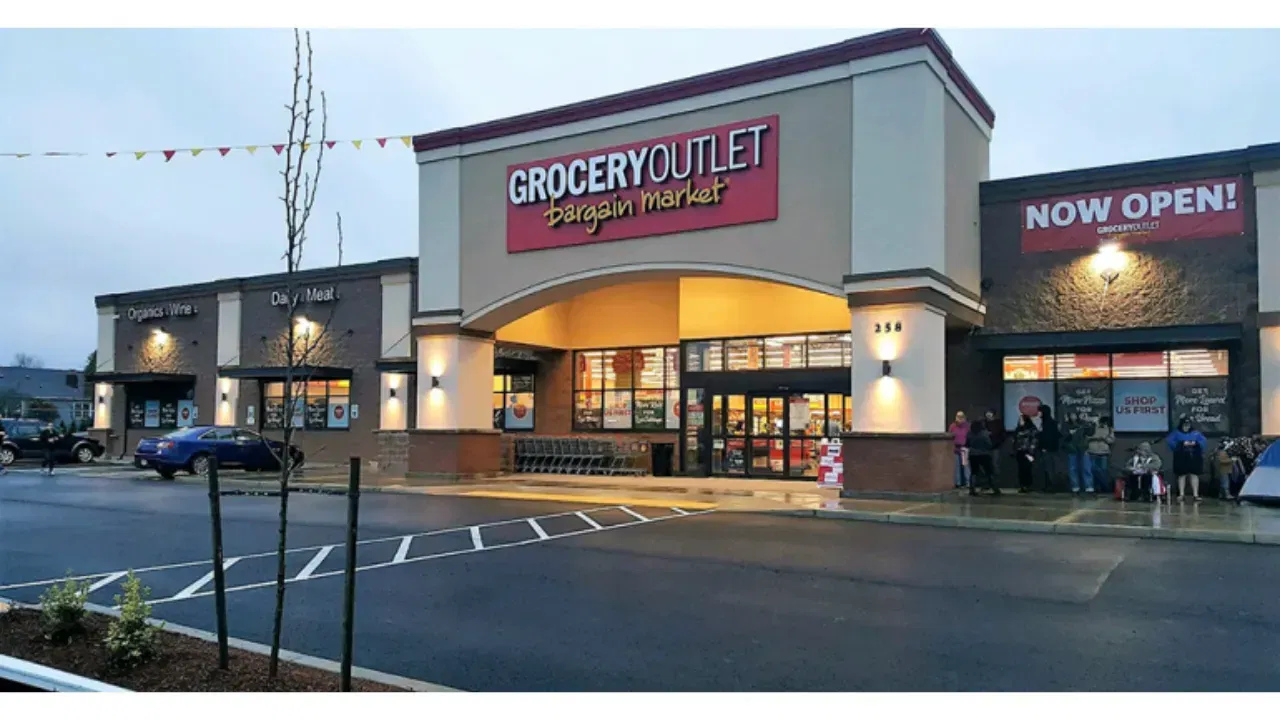
Grocery Outlet Holding Corp. (NASDAQ: GO) is closing 36 underperforming stores — roughly 6% of its fleet — as the Emeryville, California-based discounter works through a $224.9 million net loss for fiscal 2025, a jarring reversal from the $39.5 million profit it booked the year before. For investors, the store closures are far more than a retail headline: they mark the most consequential reset in the company's recent history, one that will reshape its earnings power, test a new chief executive, and determine whether the discount-grocery growth story can be repaired.
The announcement landed alongside fourth-quarter results on Wednesday, March 4, when Grocery Outlet disclosed a nearly $235 million operating loss and a net loss exceeding $218 million for the quarter. Two dozen of the 36 targeted locations sit on the East Coast, representing roughly 30% of that region's store count, according to President and CEO Jason Potter. For a company that spent years expanding aggressively into new markets, the pullback is a candid acknowledgment that growth outpaced what the business could profitably support.
Inside Grocery Outlet's $224.9 Million Reversal
Grocery Outlet's struggles are the product of a growth strategy that, in hindsight, stretched both the balance sheet and the operating model. The company — which sells deeply discounted groceries by sourcing excess inventory, closeouts, and overstocks — expanded rapidly in recent years, most notably through its acquisition of the United Grocery Outlet banner to push into the Southeast and East Coast.
That expansion came at a steep cost. In February 2025, the company announced a $61 million restructuring plan and said it would scale back its store-opening targets for the year. The moves followed the abrupt late-2024 resignation of then-CEO RJ Sheedy, which left the retailer under interim leadership until Jason Potter, a former CEO of upscale grocer The Fresh Market, took the reins in early 2025.
The fiscal 2025 numbers reveal the damage. Grocery Outlet swung from a $39.5 million net profit in fiscal 2024 to a $224.9 million net loss in fiscal 2025, while fourth-quarter operating losses neared $235 million. The 36 stores being closed — about 6% of the fleet — are concentrated on the East Coast, where the United Grocery Outlet integration has proven hardest. Brokerage firm Gordon Brothers, which is marketing the locations, described the shuttered sites as positioned in established neighborhood centers and dominant regional corridors.
From Aggressive Expansion to Retreat: The Timeline Behind the Closures
Understanding today's store closures requires stepping back through the sequence of events that got Grocery Outlet here:
- Late 2024: CEO RJ Sheedy abruptly resigns, capping a stretch of disappointing results and operational turbulence tied to the United Grocery Outlet system integration.
- Early 2025: Jason Potter, formerly CEO of The Fresh Market, is named president and CEO, signaling a new strategic direction.
- February 2025: The company announces a $61 million restructuring plan and dials back its 2025 expansion ambitions.
- March 4, 2026: Grocery Outlet reports fourth-quarter and full-year fiscal 2025 results — including a $224.9 million annual net loss — and reveals plans to close 36 underperforming stores.
- March 2026: Law firms, including Levi & Korsinsky, announce a securities fraud class action lawsuit alleging the company and its leadership made misleading statements about its store-growth strategy.
For investors, that sequence tells a story of a company that bet on scale before its infrastructure was ready — and is now paying to unwind that bet.
What 36 Store Closures Mean for GO Stock and Shareholders
For shareholders, the closures cut both ways. On one hand, exiting unprofitable locations should, over time, improve comparable-store sales and operating margins — the metrics that matter most in a turnaround. Potter framed the decision in exactly those terms during the company's March earnings call, telling the investment community that the closures are a direct correction to growth that moved faster than the business could sustainably support.

On the other hand, the near-term costs are real and already visible in the financials. Trailing-twelve-month net income has sunk to roughly negative $381 million, and the company's market capitalization has contracted to about $1.09 billion — down 38% — with shares trading near $11 as of mid-August 2026. Store-closing charges, asset-impairment write-downs, and the cost of selling or subleasing vacated locations will keep pressure on reported earnings even as the underlying store base improves.
There is also the litigation overhang. The securities fraud class action, filed after investors sustained losses, alleges the company and its CEO certified misleading statements about the health of the store-growth strategy. Class actions of this kind rarely sink a retailer on their own, but they add legal expense, management distraction, and headline risk at precisely the moment the turnaround needs clean execution.
Still, the long-term bull case has not vanished. Grocery Outlet's extreme-value model — sourcing opportunistic inventory and passing savings of roughly 40% versus conventional grocers to shoppers — has historically held up well across economic cycles. If Potter can rationalize the store base and stabilize the East Coast operation, analysts argue the company could return to the profitable unit growth that once made GO a growth darling.
Where Grocery Outlet Stands Now
As of August 2026, Grocery Outlet remains a sizable discount-grocery operator with roughly 530 stores across 16 states and trailing revenue near $4.74 billion. The closures — 36 locations, or about 6% of the fleet — are being marketed for sale or sublease, with the heaviest concentration in the East Coast markets the company entered through acquisition.
The retailer has begun to stabilize its leadership and messaging. Potter has been candid that the company over-expanded, and the restructuring announced in early 2025 has now been followed by concrete action: closing stores, slowing new openings, and re-centering the business on its profitable West Coast and core-market locations.
What Investors Should Watch Next
The next several quarters will determine whether Grocery Outlet's reset takes hold. Investors should monitor three things in particular:
- Comparable-store sales: After the closures, same-store sales growth (or its absence) will reveal whether the core business is genuinely healthy or whether demand is weakening broadly.
- East Coast progress: With 24 closures concentrated in that region, any sign that the remaining East Coast stores are reaching profitability would be a major de-risking event.
- Cash flow and restructuring charges: Watch for the pace at which one-time charges fade and whether the company can convert revenue into free cash flow again — the clearest signal the turnaround is working.
For value-minded investors, the setup is a classic high-risk, high-reward trade: a proven discount model, a reset base of stores, and a beaten-down stock — offset by execution risk, ongoing losses, and litigation. Grocery Outlet's store closures are the beginning of a turnaround, not the end of the story.
Key Takeaways for GO Stockholders
- Grocery Outlet is closing 36 stores (about 6% of its fleet) after a $224.9 million net loss in fiscal 2025.
- Roughly 24 closures are on the East Coast, where the United Grocery Outlet integration has struggled.
- A new CEO, a $61 million restructuring plan, and a securities class action lawsuit all shape the current investment picture.
- The stock has been beaten down, but the discount-grocery model remains a potential long-term catalyst if execution improves.