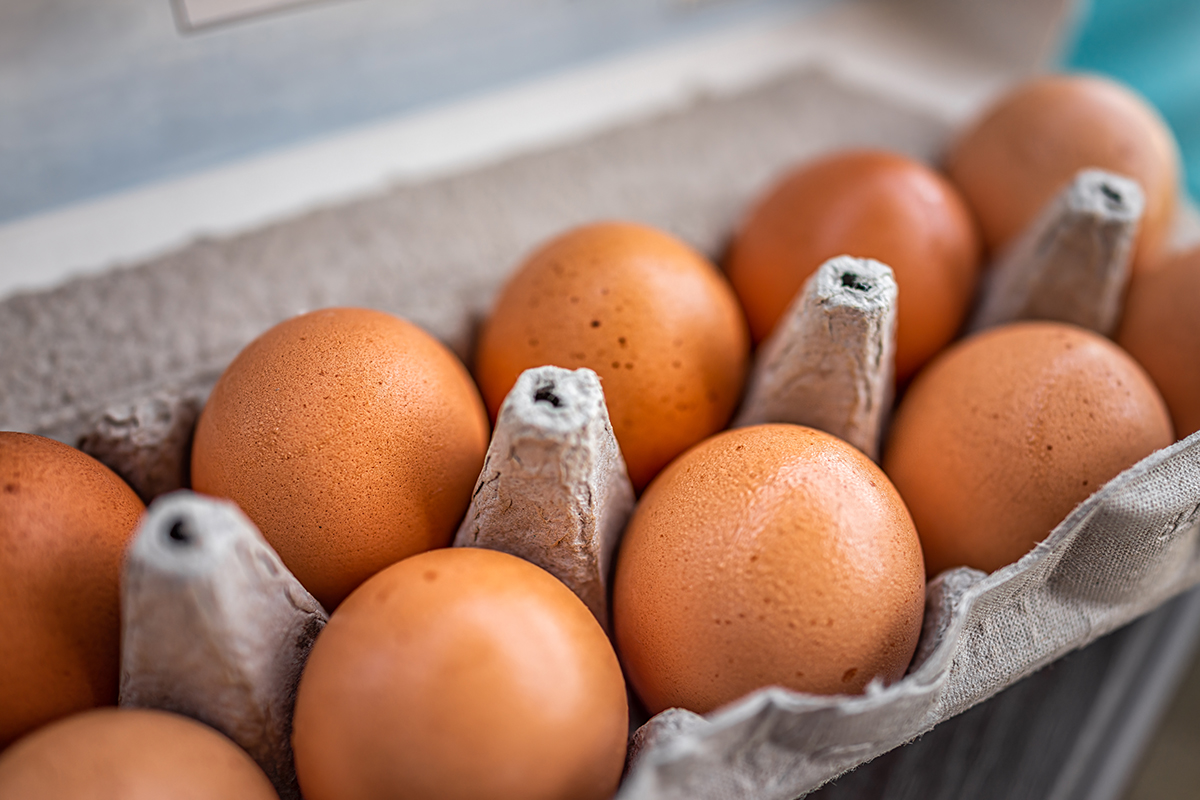
An egg recall tied to a multistate Salmonella outbreak has put the U.S. egg supply chain back under the microscope — and for investors, it is a blunt reminder that food-safety risk is financial risk. The U.S. Food and Drug Administration (FDA) classified the recall at its most severe level, a Class I designation reserved for products with a reasonable probability of causing serious adverse health consequences or death. By the time the Centers for Disease Control and Prevention (CDC) closed its investigation, 93 people across 12 states had been sickened and 34 had been hospitalized.
For a sector already navigating a devastating bird flu outbreak, record-breaking egg prices, and escalating antitrust scrutiny, the salmonella recall added yet another layer of uncertainty for the publicly traded food companies — and the investors — tied to one of America's most essential grocery staples.
Inside the Milo's Poultry Farms Salmonella Recall
The recall traces back to a single Wisconsin producer. On September 6, 2024, Milo's Poultry Farms LLC of Bonduel, Wisconsin, voluntarily recalled every egg sold under its two brands — Milo's Poultry Farms and Tony's Fresh Market — because the products had the potential to be contaminated with Salmonella, a bacteria that can cause serious and sometimes fatal infections, particularly in young children, older adults, and people with weakened immune systems.
The scope was sweeping: all carton sizes, all egg types, and all expiration dates were pulled. The affected eggs had been distributed to retail stores and foodservice distributors across Wisconsin, Illinois, and Michigan. The company acted after the FDA notified it that environmental samples had tested positive for the bacteria, and whole genome sequencing confirmed those samples were genetically linked to an ongoing, multistate outbreak. Milo's Poultry Farms halted production and distribution and said it would undergo testing and sanitization of its farms and processing equipment.
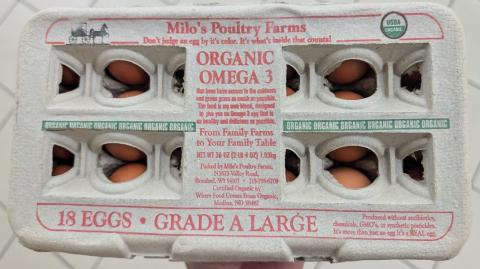
The strain made the situation particularly serious. The CDC identified the culprit as Salmonella Enteritidis, and whole genome sequencing found that bacteria from 83 sick people's samples and 72 environmental samples were predicted to be resistant to ciprofloxacin, a widely used antibiotic. Most people recover from Salmonella without antibiotics, but resistant infections can be significantly harder to treat when antibiotics are needed.
Timeline: From First Illnesses to a Closed Investigation
Foodborne-illness investigations move slowly, and this one is no exception. The CDC's timeline shows just how long an outbreak can quietly simmer before it is detected:
- May 23, 2024: The earliest illnesses in the outbreak begin.
- September 6, 2024: Milo's Poultry Farms recalls its eggs, and the FDA assigns the recall its most severe Class I classification. At that point, 65 people across 9 states had been reported sick, including 24 hospitalizations.
- September 13, 2024: The last reported illness onset date in the outbreak.
- October 17, 2024: The CDC closes the investigation with a final tally of 93 cases, 34 hospitalizations, and no deaths across 12 states.
Investigators ultimately traced the contamination to multiple points along the supply chain. The outbreak strain was recovered from the company's packing facility, from its hen egg-laying house, and from the recalled eggs themselves. The Wisconsin Department of Health Services identified three clusters of illness at restaurants where eggs were served, and traceback records showed Milo's Poultry Farms had supplied those very eggs.
Why a Salmonella Recall Is a Real Risk for Egg Stocks
For investors, the recall is a case study in how food-safety failures can become financial and regulatory liabilities. The U.S. egg market is remarkably concentrated. Cal-Maine Foods (NASDAQ: CALM), the country's largest egg producer, churns out roughly 13 billion eggs a year — about 20% of all commercially produced eggs in the United States — under brands including Egg-Land's Best, Land O'Lakes, and Farmhouse Eggs.
That concentration is a double-edged sword. It hands dominant producers meaningful pricing power, but it also means a single food-safety event, disease outbreak, or regulatory action can reverberate across the entire sector. A Class I recall doesn't merely pull product from shelves; it can trigger lawsuits, prompt federal inspections, and erode consumer trust in ways that weigh on revenue long after the recall wraps up.
The broader backdrop makes the sector especially volatile for investors. A historic outbreak of highly pathogenic avian influenza — bird flu — has wiped out tens of millions of egg-laying hens, constricting supply and driving egg prices to record highs. Those elevated prices have drawn investor dollars into egg stocks and, increasingly, drawn scrutiny from regulators. In 2025, watchdog complaints to the federal government alleged that Cal-Maine and other large producers may have profited from the bird flu-driven shortage — a claim fueled in part by the fact that Cal-Maine's own flocks had not been hit by the virus. The U.S. Department of Justice's Antitrust Division opened an investigation into the company.
That scrutiny reportedly reached a milestone in June 2026, when the Justice Department and 17 states announced a proposed settlement alleging that Cal-Maine and two other egg producers coordinated bids submitted to an egg-price reporting service, artificially inflating egg prices between 2022 and 2025. Under the proposed deal, the three producers agreed to collectively pay $3.3 million and donate 53 million eggs to food banks and nonprofits. The companies did not admit wrongdoing, and the settlement remains subject to court approval.
Where the Egg Industry Stands Today
The Milo's Poultry Farms recall itself is resolved. The CDC declared the outbreak over in October 2024, and the recalled eggs are now past their shelf life and off store shelves. But the conditions that made the recall newsworthy — a concentrated supply chain, persistent disease pressure, and elevated prices — have not gone away.
For consumers, the guidance remains straightforward: cook eggs thoroughly, practice basic food-safety habits, and check FDA recall notices. For investors, the larger story is the intersection of food safety and market power in a staple category that touches virtually every American household.
What to Watch in the Egg Sector Going Forward
Several developments could move egg-sector stocks in the months ahead. First, watch whether the proposed antitrust settlement with Cal-Maine and its peers secures court approval, and whether it opens the door to further enforcement action. Second, monitor avian influenza trends: any renewed culling of egg-laying flocks would tighten supply and pressure prices higher once again. Third, keep an eye on recall activity and food-safety enforcement, because repeated Class I recalls can damage brand trust and invite stricter federal oversight.
For long-term investors, the takeaway is clear: in the food sector, safety and compliance are not just operational details — they are balance-sheet and stock-price considerations.
The Bottom Line for Investors
- A Class I salmonella recall of Milo's Poultry Farms and Tony's Fresh Market eggs sickened 93 people across 12 states, resulting in 34 hospitalizations and no deaths.
- Food-safety failures translate into financial, legal, and reputational risk in the concentrated U.S. egg industry.
- Cal-Maine Foods (NASDAQ: CALM) produces roughly 20% of U.S. eggs, making it the sector's bellwether stock.
- Bird flu-driven price spikes and a 2026 antitrust settlement layered regulatory risk on top of food-safety concerns.
- Investors should treat recalls, disease outbreaks, and compliance as core risk factors when evaluating food stocks.