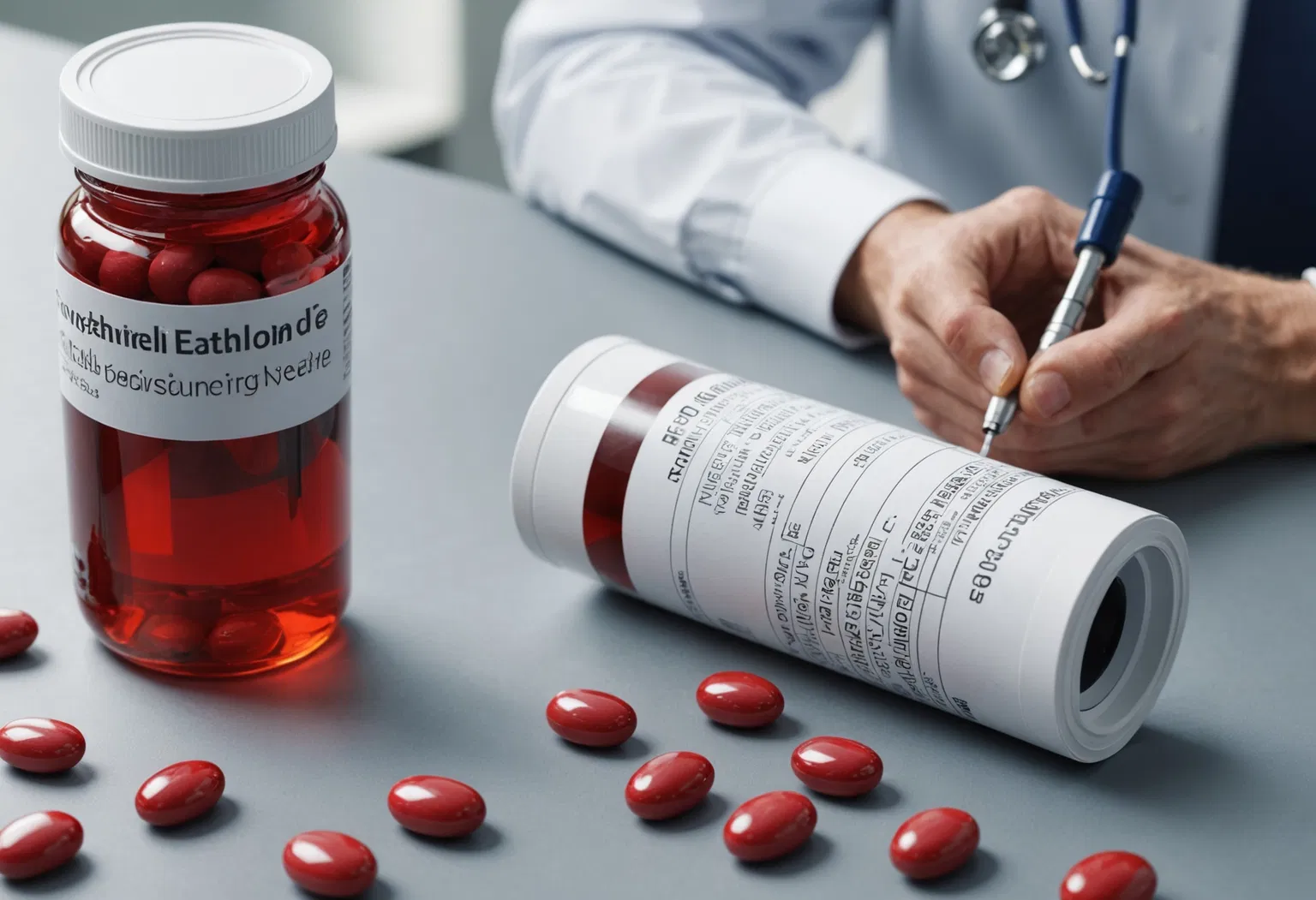
The U.S. Food and Drug Administration has expanded a nationwide recall of chlorthalidone, one of the most widely prescribed generic blood pressure medications, after routine quality testing found the tablets "failed dissolution specifications." The latest action covers 13,567 bottles of 25 mg tablets, and it marks the second time in roughly three months that the same drug has been pulled from pharmacy shelves. For investors, the episode is more than a public-health headline: it is a fresh signal of the manufacturing-quality pressures building across the pharmaceutical and generic drug supply chain in 2026.
Inside the Recall: Why the Tablets Failed Testing
Chlorthalidone is a diuretic—commonly called a "water pill"—used to treat high blood pressure and fluid retention. The recalled product is Chlorthalidone Tablets, USP, 25 mg, sold in 100-count and 1,000-count bottles under NDC 64980-599-01. The affected batch carries the lot number RISA24002 and an expiration date of April 2027.
The FDA says the tablets "failed dissolution specifications," meaning they did not break down properly during laboratory testing. Dissolution is a critical quality attribute for an oral drug: if a tablet does not dissolve at the expected rate, the active ingredient may not be absorbed consistently, which can make the medication less effective. For patients relying on chlorthalidone to control their blood pressure, a poorly dissolving tablet raises the risk of uncontrolled hypertension.
The FDA has classified the recall as Class II, a category for situations in which exposure may cause "temporary or medically reversible" adverse health consequences and in which the probability of serious harm is remote. While that is less severe than a Class I recall—reserved for products with a reasonable probability of serious harm or death—it still reflects a genuine effectiveness concern rather than a mere labeling error.
The product was manufactured by Inventia Healthcare Limited, an India-based contract manufacturer, and distributed in the United States by Rising Pharma Holdings, Inc., a generic pharmaceutical company based in New Jersey. Neither firm is publicly traded, which is why the recall did not move a specific ticker—but the event carries clear read-through for the broader generic drug sector and for the investors who finance it.
Timeline: How the Chlorthalidone Recall Unfolded
The September action was not an isolated event. It followed an earlier recall of the same medication, suggesting a recurring quality problem rather than a one-off batch issue.
- June 2026: Rising Pharma Holdings initiated a recall of roughly 11,460 bottles of chlorthalidone tablets for the same "failed dissolution specifications" finding.
- June 21–22, 2026: National and local news outlets reported the recall, which applied to 100-count and 1,000-count bottles sold nationwide.
- September 2026: A second recall was announced, covering 13,567 bottles of the same product (batch RISA24002, expiration April 2027), drawing headlines such as "US FDA Recalls India-Made BP Drug For The Second Time In 3 Months."
The repeat recall matters to investors because it indicates the underlying manufacturing issue was not fully resolved after the first corrective action. Repeated inspection findings and follow-on recalls are precisely the kind of red flags that can foreshadow more serious enforcement—including FDA warning letters or import alerts—that weigh on a company's ability to supply the market.
Why Recalls Move Markets: The Investing Read-Through
Academic research has long shown that product recalls destroy shareholder value. A landmark 1985 study by Jarrell and Peltzman found that the shareholders of firms producing recalled drugs and automobiles absorbed financial losses that exceeded the direct cost of the recall itself—evidence that markets price in reputational damage and lost future sales, not just the expense of pulling inventory. More recent work consistently documents negative abnormal returns around recall announcements, with recalls involving replacement or refunds producing the sharpest declines.
For pharmaceutical investors, 2026 has provided an unusually visible test of that dynamic. The chlorthalidone recall is one of several cardiovascular drug recalls this year:
- Amgen (NASDAQ: AMGN) voluntarily recalled nearly one million bottles—944,142 bottles by one report—of Corlanor (ivabradine), a heart failure drug, and Sensipar, a kidney medication, after the discovery of unexpected foreign matter and contamination. The affected Corlanor was manufactured in Italy.
- Novartis (NYSE: NVS) recalled a lot of valsartan, sold under the brand name Diovan, for the very same "failed dissolution specifications" reason cited in the chlorthalidone case. That recall was initiated on August 4, 2026.
The fact that both a large branded drugmaker like Amgen and a generic distributor like Rising Pharma hit quality problems in the same therapeutic category within weeks underscores a sector-wide challenge: the pressure to control manufacturing costs while meeting increasingly rigorous quality standards. In generics, where margins are thin and price competition is intense, cost-cutting can erode quality-control investment—and research has linked heightened price competition in generics to an increase in manufacturing-related recalls.
There is also a geographic angle. Chlorthalidone was manufactured in India, a country that produces a large share of the world's generic active pharmaceutical ingredients and finished doses. Recalls tied to Indian facilities—such as the well-documented 2018–2019 valsartan recalls over nitrosamine impurities traced to plants in India and China—have repeatedly demonstrated the concentration risk embedded in offshore manufacturing. For investors, a company's exposure to single-source or single-geography suppliers is now a material quality and supply-chain consideration.
Where Things Stand Now: The Latest on the Recall
As of the most recent reporting, the FDA lists the chlorthalidone recall as Class II, and the recall remains voluntary, initiated by Rising Pharma Holdings. Patients with affected bottles—identified by NDC 64980-599-01 and batch RISA24002—are generally advised to continue taking their medication as prescribed and contact their pharmacist or healthcare provider for a replacement, because abruptly stopping a blood pressure medication can be more dangerous than taking a slightly less effective dose. The key financial point is that neither Rising Pharma nor Inventia Healthcare trades publicly, so the direct equity impact is limited; the signal, however, ripples outward to the generic drug group and to contract manufacturing as a business model.
What Happens Next: What Investors Should Watch
The most likely next steps are regulatory rather than dramatic. Investors should monitor three signals. First, watch for whether the FDA escalates from a Class II recall to a warning letter or import alert affecting Inventia Healthcare's Indian facility—an escalation that could disrupt supply and shift market share to competing generic makers. Second, track follow-on recalls across the cardiovascular space; a cluster of quality failures can depress sentiment for the entire generic drug complex even when individual companies are private. Third, pay attention to how large, publicly traded generic manufacturers—and their branded peers—respond with quality-assurance investments, because firms that can demonstrate supply-chain resilience and quality control tend to command valuation premiums during recall-heavy periods.
The Bottom Line: Key Points for Investors
- The FDA expanded a Class II recall of generic chlorthalidone blood pressure tablets after they failed dissolution testing, covering 13,567 bottles in September—the second recall of the drug in about three months.
- The product was made by India-based Inventia Healthcare and distributed by Rising Pharma Holdings, both private companies, so there is no direct ticker impact.
- The recall is part of a broader 2026 wave of cardiovascular drug recalls, including Amgen's nearly one-million-bottle Corlanor recall and Novartis's valsartan recall over the same dissolution issue.
- Research shows recalls produce negative abnormal returns and destroy more shareholder value than the direct cost of the recall itself—reputation risk is real.
- Investors should watch for FDA escalation (warning letters or import alerts), the concentration risk of offshore generic manufacturing, and the quality-control response of publicly traded drugmakers.