
Barcelona launched their 2026/27 La Liga title defence with a ruthless 5-0 demolition of Elche at the Martínez Valero on August 23 — Raphinha and Fermín López each struck twice and new signing Karim Adeyemi opened his account — but the scoreline investors should study was tucked inside the club's accounts. The reigning Spanish champions posted record revenues of €994 million for 2024/25, a second straight annual surplus, and a gross debt load of roughly €2.4 billion that now rests on one of the most expensive stadium gambles in football history. Elche vs Barcelona was one-sided on the pitch; off it, Barcelona's balance sheet is the real story financial markets are watching.

From Elche to the Balance Sheet: Barcelona's Two Fronts
The gap between Elche and the champions was stark on the field. Barcelona's squad — still built around Lamine Yamal, Pedri and Gavi — ran out 5-0 winners and sent an early warning to their title rivals. But the club is simultaneously fighting a second, quieter battle in the boardroom. After years on the edge of financial collapse, president Joan Laporta's board has stabilised operations, yet the club's long-term solvency still depends on the success of the Espai Barça project, the redevelopment of Camp Nou that has forced Barcelona to play home games at the Estadi Olímpic Lluís Companys.
That temporary move is costing real money. Barcelona has said it is losing roughly €100 million in revenue because the Olympic stadium has far fewer seats — and almost no premium VIP capacity — than a rebuilt Camp Nou. The club has compensated through record commercial income, but the trade-off illustrates how tightly Barcelona's on-pitch dominance and off-pitch finances are now intertwined.
Record Revenues Meet a Record Debt Load
Barcelona's 2024/25 accounts, presented ahead of the club's October General Assembly, show a business performing well at the operating level. Total revenue reached €994 million, the second-highest figure of any football club behind Real Madrid, according to the club's own disclosures and analysis by Football Finance Lab. A modest net surplus of €2 million marked the second consecutive year in the black — symbolically important after the record losses of the pandemic era.

Driving the revenue surge was commercial muscle: sponsorship income climbed 22% to a record €259 million, while merchandising jumped 55% to an all-time high of €170 million, helped by the global appeal of young stars and the club's dominant women's team. Operating profit hit €71 million, and personnel costs of €509 million stayed at about 51% of turnover — comfortably below UEFA's 70% squad-cost ceiling.
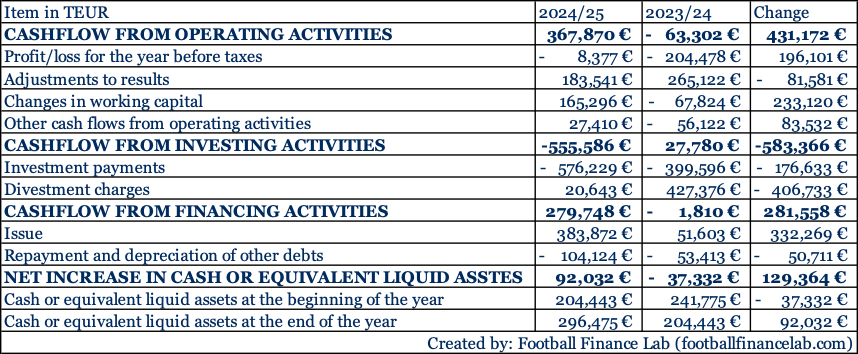
Yet the headline numbers obscure the leverage underneath. Barcelona's net debt stood at €469 million, down €90 million year over year, but its gross debt — including the financing for the Camp Nou rebuild — is around €2.4 billion, according to Football Finance Lab. The club spent €476 million on stadium construction in 2024/25 alone and took on €383 million in new borrowings, making it highly dependent on banks and external lenders.
Timeline: From Near-Collapse to 'Economic Recovery'
To understand why a €2.4 billion gross debt figure matters, it helps to trace Barcelona's path back from the brink:
- 2021: Barcelona reports massive losses, cannot re-register Lionel Messi under La Liga's salary rules, and the club's debt peaks above €1.3 billion amid the COVID-19 revenue crash.
- 2022: Laporta's board activates 'economic levers' — selling stakes in future television income and Barça Studios — to raise short-term cash and register players.
- 2023–2024: The club relocates to the Olympic stadium as Camp Nou demolition and redevelopment begin, cutting matchday income while construction costs mount.
- 2024/25: Barcelona wins a domestic double, posts €994 million in revenue and a €2 million surplus, and trims net debt by €90 million.
- 2025/26: The club budgets €1.075 billion in revenue and bets that a gradual return to the expanded Camp Nou will unlock ticket, museum and VIP income.
- August 2026: Barcelona opens the new La Liga season with a 5-0 win at Elche, extending the on-pitch momentum that underpins its commercial recovery.
Why Barcelona's Numbers Matter to Investors Beyond the Pitch
For investors, Barcelona is less a stock to buy than a case study in how European football is being repriced as an asset class. Unlike Manchester United or Juventus, Barcelona is member-owned and not publicly traded, so there is no Barça ticker to purchase. But its financial trajectory shapes the wider market in three ways.
First, valuations keep climbing. Forbes pegged Barcelona at $5.65 billion in its 2025 ranking, and its 2026 list was again led by Spain's two giants — Real Madrid and Barcelona — alongside 11 Premier League clubs in the top 30. Football Benchmark's 2025 European Elite report put Real Madrid's enterprise value at €6.3 billion and valued the top 32 clubs collectively at €64.7 billion, more than double the figure a decade earlier.
Second, regulation is making clubs more investable. UEFA's Financial Sustainability Regulations, which cap squad costs as a share of revenue, are forcing the discipline that institutional investors have long demanded. Real Madrid became the first club to surpass €1 billion in annual operating revenue, and analysts argue stricter domestic licensing standards are reinforcing football's long-term appeal as an asset class.
Third, Barcelona itself illustrates both the opportunity and the risk. The Camp Nou rebuild is a leveraged bet: if the renovated stadium delivers the projected matchday and VIP uplift, Barcelona gains a durable revenue moat that few rivals can match. If construction costs keep rising or the debt proves unserviceable, the club could face a liquidity crisis — a cautionary tale for anyone treating football clubs as straightforward growth assets.
Where Barcelona Stands Now: The 2025/26 Budget and Camp Nou Return
Barcelona's 2025/26 budget targets €1.075 billion in revenue, an 8% increase, driven by an expected €50 million uplift from the partial return to Camp Nou across ticketing, the museum and VIP hospitality. The club is also forecasting a further €70 million in advertising growth and a €10 million transfer surplus, even as salary and management costs rise in line with the stadium transition.
The operating business is healthy — positive cash flow rose by €92 million in 2024/25, easing short-term liquidity concerns. But the stadium's construction bill, already €476 million in a single season and financed almost entirely with debt, remains the single biggest swing factor. As Football Finance Lab put it, Barcelona is putting all its eggs in one basket, and that basket is called Camp Nou.
What Happens Next for Barcelona and European Football Investors
Watch three signposts over the coming months. First, the pace of the Camp Nou return — every completed section of premium seating converts directly into higher matchday revenue. Second, La Liga's squad cost limits, which will reveal whether Barcelona's growing revenue translates into more transfer flexibility or is absorbed by the stadium's debt service. Third, the broader repricing of European clubs, as more US and sovereign investors buy into teams and push valuations higher.
For retail investors, the practical lesson from Elche vs Barcelona is not about the match itself but about how to read a football club as an investment. Focus on the difference between net and gross debt, the ratio of squad costs to revenue, and whether a club's growth is organic or dependent on one leveraged infrastructure bet. Barcelona passes the first test and is still working on the second.
The Bottom Line for Investors
- Barcelona's 5-0 win at Elche extended on-pitch momentum that underpins its commercial recovery, but the club's finances are the more important scoreline.
- The club posted record €994 million revenue and a €2 million surplus in 2024/25, with net debt down €90 million to €469 million.
- Gross debt of roughly €2.4 billion, largely tied to the Camp Nou rebuild, is the key risk — a leveraged bet on future matchday income.
- Forbes values Barcelona around $5.65 billion, and European club valuations have roughly doubled in a decade, attracting institutional and sovereign capital.
- Investors should watch the Camp Nou return, La Liga squad cost limits, and the widening gap between top clubs' revenue moats and their debt loads.