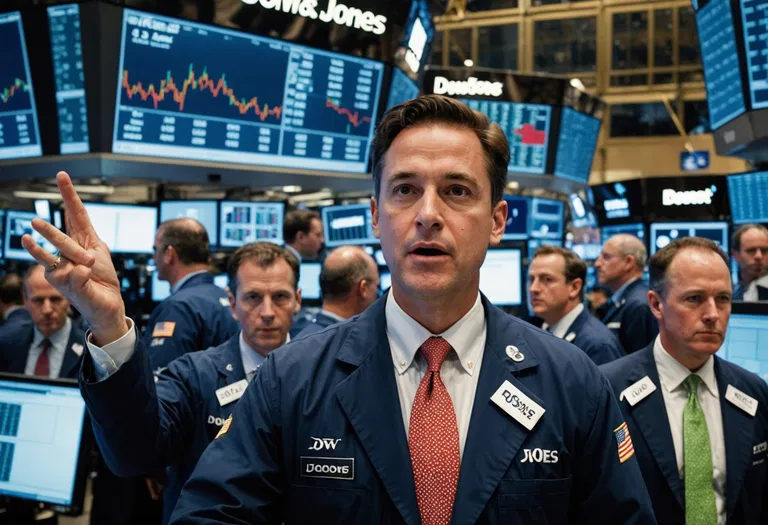
The Dow Jones Industrial Average closed at 52,389.75 on Monday, November 9, 2026, surging 1,104 points (2.15%) and helping Wall Street reclaim roughly $1.5 trillion in market value in a single session. The S&P 500 jumped 2.35% to 7,549.94 for its best day since April 8, while the Nasdaq Composite climbed 2.74% as all 11 S&P 500 sectors finished in the green. The surge capped one of the most volatile stretches in years — and it arrived on the back of three powerful catalysts: a sharp slide in oil prices, a roaring comeback in semiconductor stocks led by AMD, and a market finally getting comfortable with Washington's new political reality.
For investors tracking the Dow Jones this week, the rally is about more than a single green day. It is a window into how election results, energy prices, and the artificial-intelligence trade are reshaping portfolios — and where the risks lie next.
Inside Wall Street's Wildest Week in Years
The Dow's 1,104-point surge did not happen in a vacuum. It was the crescendo of a week defined by whiplash. On Wednesday, November 4 — the day after Democrats swept the 2026 midterm elections — the Dow exploded 1,569 points, its best post-midterm session in 44 years and its best day of 2026. Traders cheered the decisive outcome and the return of divided government, a setup that historically makes sweeping policy changes harder.
Then came Thursday's reversal. Worries that a Democratic Congress could take aim at the booming AI and data-center trade sent the Nasdaq tumbling 3.9%, with Micron and AMD each down roughly 15% and Nvidia sliding 8%. It was the technology sector's worst drubbing in more than a year.
By Monday, the market had reassessed — and swung hard the other way. Reuters reported that a drop in crude oil tempered inflation fears, helping the S&P 500 claw back more of last week's rout. The fact that every sector rose, not just tech, signaled rare market breadth.
From Election Night to the Rebound: A Timeline
- June 29: Alphabet, Google's parent, replaces Verizon in the Dow, modernizing the 30-stock index.
- August 5: The Dow closes at an all-time high of 54,349.12.
- October 29: Reports surface that Nvidia CEO Jensen Huang was targeted by an alleged Chinese spy with whom he had an intimate relationship.
- November 3: Democrats win the House and Senate in a blue wave midterm sweep.
- November 4: The Dow soars 1,569 points — its best post-midterm day in 44 years.
- November 5: AI and chip stocks crash: Nasdaq -3.9%, AMD and Micron -15%, Nvidia -8%.
- November 9: The Dow adds 1,104 points; the S&P 500 posts its best day since April 8; Wall Street gains $1.5 trillion.
- November 10: A hotter-than-expected inflation report sends stocks lower and revives December rate-hike fears.
5 Reasons the Dow and S&P 500 Are Rallying
1. Oil's slide cooled inflation fears. Brent crude tumbled about 4.3% on Monday, extending a decline of more than $20 a barrel since late October from roughly $113, on hopes for peace between the U.S. and Iran. Cheaper energy eases inflationary pressure across the economy, giving the Federal Reserve more room to maneuver.
2. Divided government is market-friendly. With Democrats taking the House and Senate while the White House stays in Republican hands, gridlock lowers the odds of aggressive tax or regulatory changes — a configuration equities have historically rewarded.
3. AMD reignited the AI trade. AMD soared roughly 13% to about $508.58 after Google selected its EPYC chips for a new AI system and Oppenheimer upgraded the stock to Outperform with a $600 target. It was a powerful reminder that AI demand is not confined to a single company.
4. A broad tech rebound. After Thursday's rout, investors rotated back into growth names, lifting the Nasdaq 2.74% in its strongest session in months.
5. Tesla and the EV space joined in. Tesla climbed about 5.5% to roughly $378 after announcing a temporary Cybertruck production boost, while smaller EV makers surged — evidence of widening risk appetite across the market.
Why Nvidia's Slide Is a Warning for Single-Stock Investors
Not everything rallied. Nvidia fell 4.27% on Monday and slid again on Tuesday after the company's board opened an independent investigation into CEO Jensen Huang, who acknowledged an extramarital affair with a woman U.S. intelligence agencies believe was an alleged Chinese spy. The episode threatens to complicate Nvidia's lobbying efforts on China export rules and injects rare governance risk into the AI bellwether.
For investors, the Nvidia story is a textbook lesson in concentration risk. A single-stock surprise — even a governance headline unrelated to earnings — can move the market's largest positions sharply against you, even as the broader indexes climb. Diversification, not conviction in any one name, is what keeps a portfolio resilient through moments like this.
Where the Dow Stands Now — and the Inflation Wild Card
The rebound hit a wall on Tuesday, November 10, when a hotter-than-expected consumer inflation report sent stocks lower and pushed Treasury yields higher. Analysts warned the data sets the stage for another rate hike in December, according to TheStreet. The Dow remains well below its August all-time high of 54,349.12, but comfortably above its post-election lows — a reminder that inflation, not politics, may be the dominant force for the rest of the year.
For investors who own the Dow through ETFs like the SPDR Dow Jones Industrial Average ETF Trust (DIA), the week's swings are a case study in why staying invested beats trying to time the market. The index lost ground Thursday, gained it all back Monday, and wobbled again Tuesday on inflation data — yet the longer trend stayed intact. From the addition of Alphabet in June to this summer's push toward the 54,000 level, the Dow keeps compounding over time, even through volatile headlines.
What's Next: Rate Hikes, Gridlock, and the Road Ahead
The market's path now hinges on two questions. First, will the Federal Reserve follow through with a December rate hike if inflation keeps running hot? Second, how will a Democratic Congress actually govern once it takes control in January? Early signals, from AI infrastructure to energy policy, point toward spending and oversight rather than sweeping tax increases, but the details will matter for individual sectors.
Strategists at firms such as Lombard Odier and Morgan Stanley note that political gridlock has historically been supportive for equities, but the Fed's inflation fight remains the bigger swing factor. Investors should watch upcoming inflation prints and Fed guidance more closely than election headlines.
The Bottom Line: Key Takeaways for Investors
- The Dow surged 1,104 points (2.15%) on November 9, closing at 52,389.75 — its best day since the post-midterm pop.
- The rally was driven by falling oil prices, a divided government, and an AMD-led semiconductor rebound.
- Nvidia dropped 4.27% as its board investigates CEO Jensen Huang, underscoring single-stock concentration risk.
- A hot November 10 CPI report revived December rate-hike fears and knocked stocks back the next day.
- For long-term investors, the takeaway is familiar: election-year volatility is normal, and market breadth matters more than any single day's move.