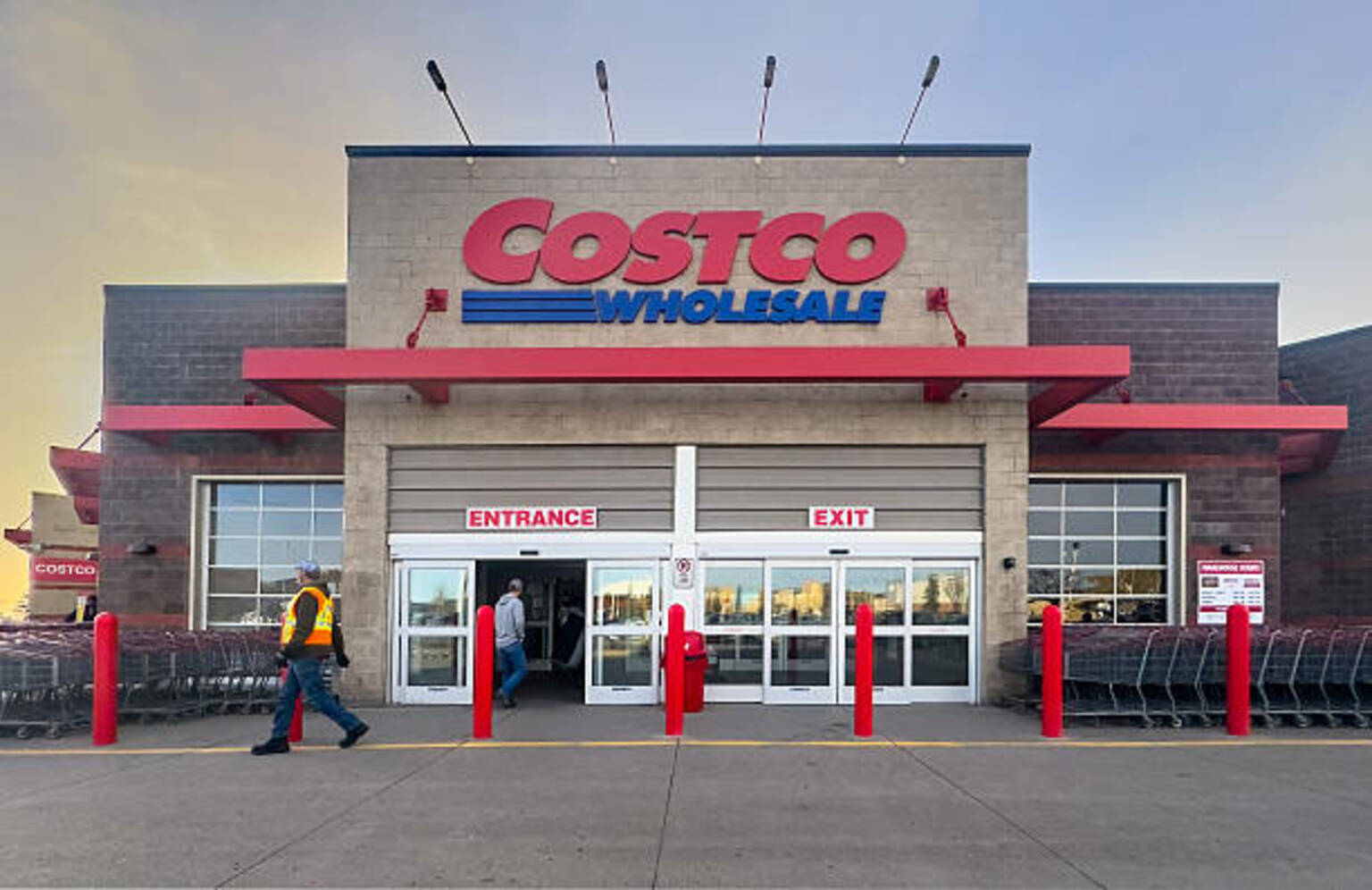
Costco Wholesale Corporation closed fiscal year 2025 with a stunning $269.9 billion in net sales, an 8.1% increase year-over-year, and net income of $8.1 billion — yet investors who held the stock through 2025 found themselves nursing losses. Shares of the warehouse giant lost roughly 5% of their value last year, significantly underperforming the S&P 500 index at a time when the company's fundamental business metrics have arguably never been stronger.
The disconnect between Costco's operational performance and its stock price has become one of the most talked-about puzzles on Wall Street, and it all comes down to a single word: valuation.
How Costco's Business Strength Collided With Market Reality
Costco's fiscal 2025 results, released in September 2025, painted a picture of a retailer firing on all cylinders. Net sales climbed to $269.9 billion from $249.6 billion the prior year, driven by a 6% rise in comparable sales across its U.S., Canadian, and international segments. E-commerce comparable sales surged even higher, posting 16.1% growth in the fourth quarter alone. Net income for Q4 reached $2.61 billion, or $5.87 per diluted share, up from $2.35 billion a year earlier.
The momentum continued into fiscal 2026. For the first quarter ended November 23, 2025, Costco reported revenue of $67.31 billion and earnings per share of $4.50, beating analyst expectations of $4.27. Total same-store sales grew 5.7%, with e-commerce jumping 13.6%. Membership fee revenue — the lifeblood of Costco's business model — rose 10.4% year-over-year in Q3 FY2025 and an impressive 14% in Q4, reflecting the first membership fee increase in seven years that took effect in September 2024.

Membership rolls swelled to 68.3 million individual cardholders by fiscal year-end, and renewal rates remained above 90% in the U.S. and Canada — a testament to the loyalty Costco commands from its customer base. The company also opened new warehouses across multiple countries, continuing its measured international expansion.
Timeline: Costco's Rollercoaster Year in the Markets
The story of Costco stock in 2025 is best understood chronologically. After starting the year near all-time highs, the stock reached a peak in February 2025 before beginning a steady descent. By mid-year, shares had given back most of their gains, and by late 2025, the stock was nursing a year-to-date loss of approximately 5%.
September 2025: Costco releases fiscal year 2025 results showing record revenue of $269.9 billion. The stock fails to rally on the news as valuation concerns dominate investor sentiment.
October 2025: Membership fee revenue is reported up 14% year-over-year. Analysts begin warning that Costco's forward P/E of 45x is nearly double the S&P 500's 23.65x and far above retail peers like Target (12.7x) and Ross Stores (26.4x).
November 2025: The stock hits its 2025 lows, erasing all year-to-date gains. Seeking Alpha analyst warns that Costco's PEG ratio "remains extreme," noting that trend sales growth had slowed to just 6% while margins were fading.
December 2025: Costco beats Q1 FY2026 earnings expectations with $4.50 EPS against $4.27 consensus. Revenue of $67.31 billion also edges past estimates. The stock stabilizes but fails to mount a meaningful recovery.
Early 2026: Costco shares begin to rebound, rising approximately 19% year-to-date, and briefly touch a new all-time high near $1,096 in May 2026, reigniting stock split rumors.
Why Valuation Is the 800-Pound Gorilla in the Room
The core issue plaguing Costco stock is not the business — it's the price investors are being asked to pay for it. Costco currently trades at a P/E ratio of roughly 52-53x earnings, a significant premium to its historical average of around 39x. By comparison, the broader retail industry trades at approximately 29.5x forward earnings, and the S&P 500 sits at about 23.7x.
To justify such a premium, the market would need to see accelerating growth. Instead, Costco's comparable sales growth has been steadily decelerating. After posting 7.6% total company comparable sales in Q4 FY2025, the figure slipped to 5.7% in Q1 FY2026. Analysts at firms like Trefis have noted that Costco's stock is "highly vulnerable to multiple compression," and a discounted cash flow analysis from Webull suggests the stock may be overvalued by as much as 31.9%.
Costco's forward 12-month P/E of 45.11 is dramatically higher than the 12.71 of Target, 26.40 of Ross Stores, and 19.55 of Dollar General — its closest comparable retailers. The premium is even starker when measured against the PEG ratio, which compares P/E to growth rate. With sales growth slowing to the mid-single digits, Costco's PEG ratio is among the highest of any U.S. mega-cap stock.
Neil Patel of The Motley Fool summed it up succinctly in December 2025: "Given Costco's high valuation, it will more than likely underperform the indexes over the next year."
Stock Split Buzz: Will Costco Finally Split Its Shares?
One factor driving renewed interest in Costco stock is the growing chorus of speculation around a potential stock split. Costco has not conducted a forward stock split since January 2000 — more than 25 years ago. Since then, the stock has skyrocketed roughly 2,780%, surpassing the $1,000 per share mark for the first time in 2025 and briefly touching $1,096 in May 2026.
High-profile companies like Nvidia and Amazon have recently executed stock splits to make their shares more accessible to retail investors, and Costco is increasingly seen as a prime candidate to follow suit. Analysts at MarketBeat have identified Costco as one of the three stocks most likely to split, alongside Netflix and Meta Platforms.
Arun Sundaram, an analyst covering Costco, noted that despite the rising share price and bullish outlook for the business, Costco's management has given no indication of an imminent split. Still, with shares trading well above $1,000 and retail investor demand for more accessible share prices, the pressure is building.
Where Things Stand Now: A Tale of Two Trajectories
As of early 2026, Costco finds itself in an unusual position. Its business is arguably as strong as it has ever been. Membership numbers are at all-time highs. Revenue continues to grow at a steady 8% clip. E-commerce is expanding at double-digit rates. And the company's fortress-like balance sheet, with $16.2 billion in cash and cash equivalents as of November 2025, provides ample flexibility for dividends, share buybacks, and expansion.
Yet the stock's forward trajectory depends almost entirely on whether the market decides the current valuation is justified. Costco has historically commanded a premium because of its recession-resistant business model, high renewal rates, and consistent growth — but the current premium may simply be too high for the growth rate the company is delivering.
What Happens Next: The Road Ahead for Costco Investors
The consensus among analysts is cautiously optimistic. The average 12-month price target for Costco stock sits at approximately $1,058, suggesting modest upside from current levels. Most analysts rate the stock a "Buy," but with the caveat that near-term returns may be limited by valuation headwinds.
For Costco to outperform from here, the company will likely need to deliver an acceleration in comparable sales growth — possibly driven by further e-commerce penetration, international expansion, or new membership tiers. Alternatively, a meaningful pullback in the stock price could create a more attractive entry point, as it would address the valuation problem without requiring the company to grow faster.
A stock split, if announced, could provide a short-term catalyst by making shares more accessible to retail investors and potentially driving increased demand. But a split does nothing to change the underlying fundamentals, and the valuation question would remain.
The Bottom Line: Key Points to Remember
- Costco's business is thriving — $269.9B in FY2025 revenue, 8.1% growth, and membership fee income surging 14%.
- The stock underperformed in 2025, declining ~5%, due to extreme valuation concerns (P/E of 52-53x).
- Comparable sales growth is decelerating (from 7.6% to 5.7%), making the high PEG ratio difficult to justify.
- Stock split rumors are building as shares trade above $1,000 for the first time since 2000.
- The average analyst price target of ~$1,058 suggests modest upside, but valuation remains the key risk.
- Investors should watch for any acceleration in comparable sales growth or a more attractive entry price before adding to positions.