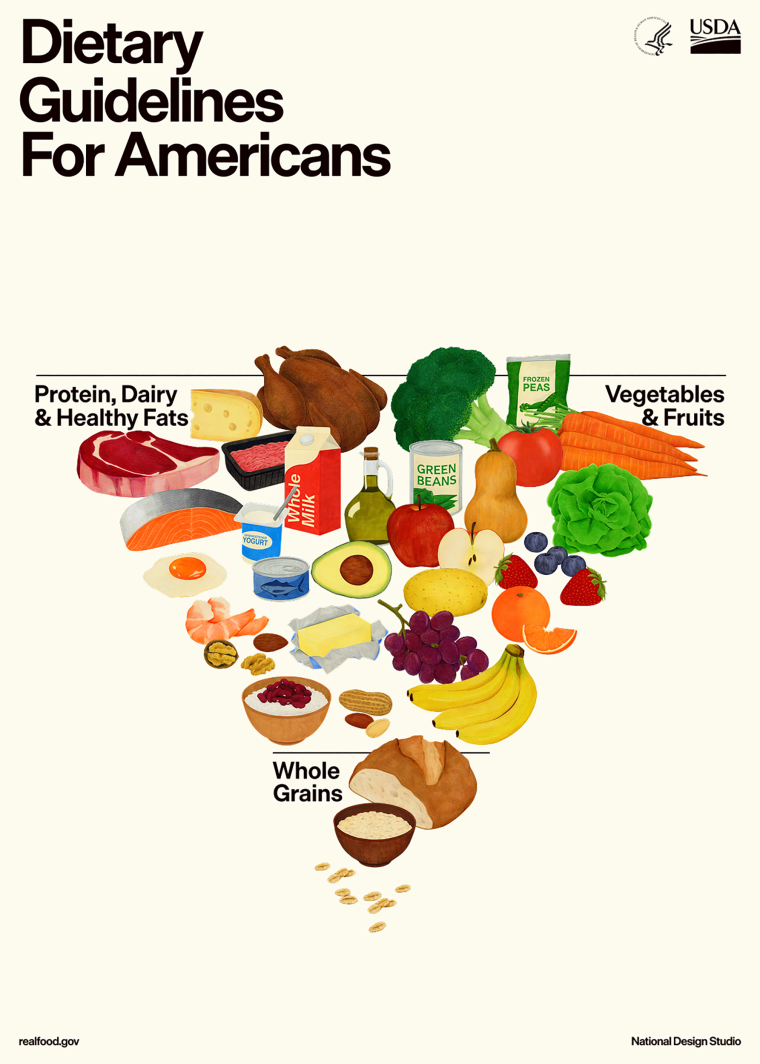
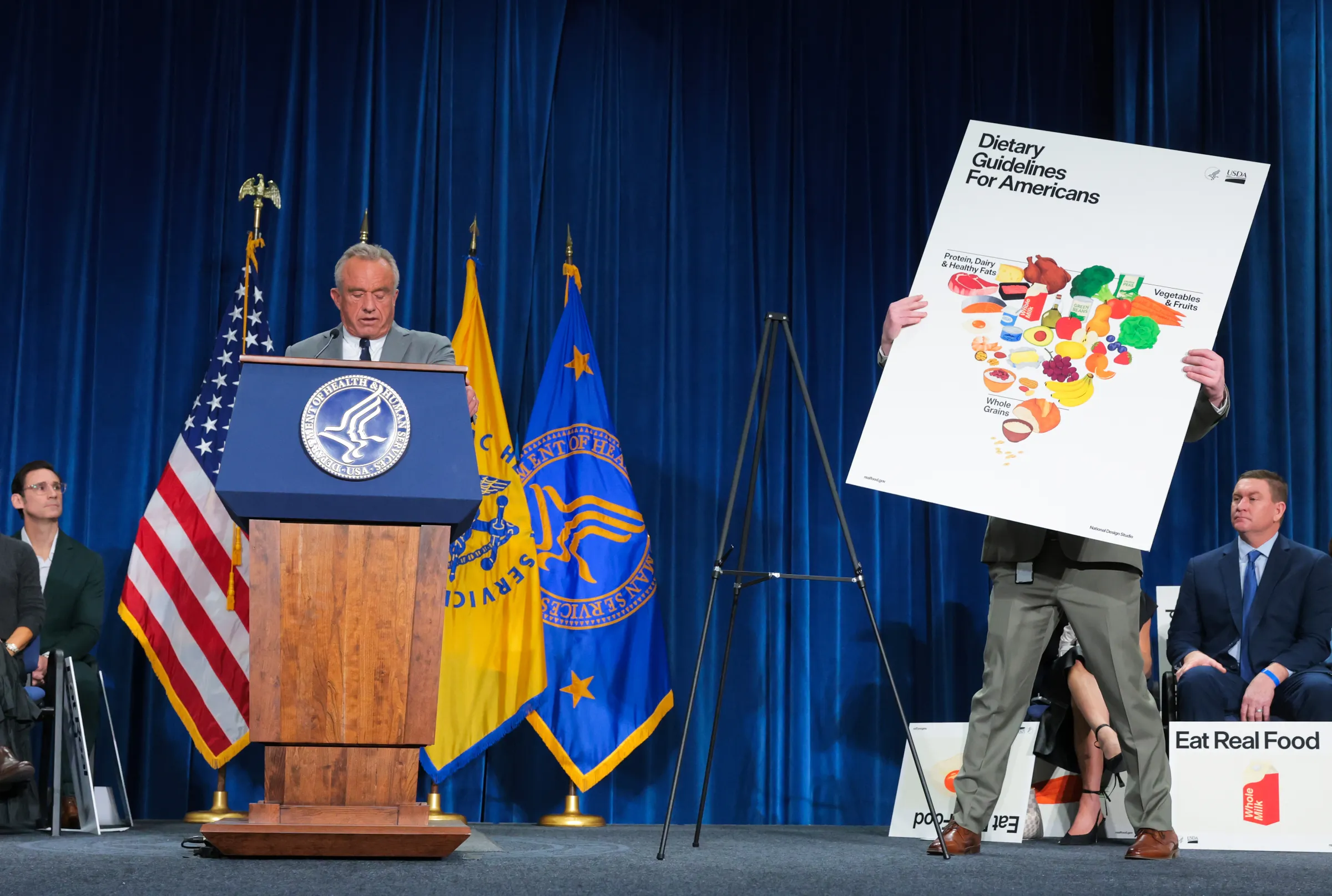
The familiar food pyramid that guided American nutrition for decades has been turned upside down—literally. On January 7, 2026, the U.S. Department of Agriculture (USDA) and Department of Health and Human Services (HHS) released the Dietary Guidelines for Americans 2025–2030, replacing the Obama-era MyPlate with a new, inverted food pyramid. This historic reset prioritizes protein, full-fat dairy, and healthy fats while dramatically reducing the emphasis on whole grains and added sugars. Health Secretary Robert F. Kennedy Jr. hailed the guidelines as "the most significant reset of federal nutrition policy in history," but the changes have sparked fierce debate among nutrition experts.
How the New Food Pyramid Works: A Complete Breakdown
The most visible change in the 2026 dietary guidelines is the return of the food pyramid—but this time it's flipped. The traditional pyramid, introduced in 1992, placed grains at the broad base and fats at the narrow top. The new version inverts this hierarchy: protein, dairy, and healthy fats occupy the wide top section, vegetables and fruits sit in the middle, and whole grains are relegated to the narrow bottom. This visual shift signals a fundamental change in what the government considers the foundation of a healthy diet.
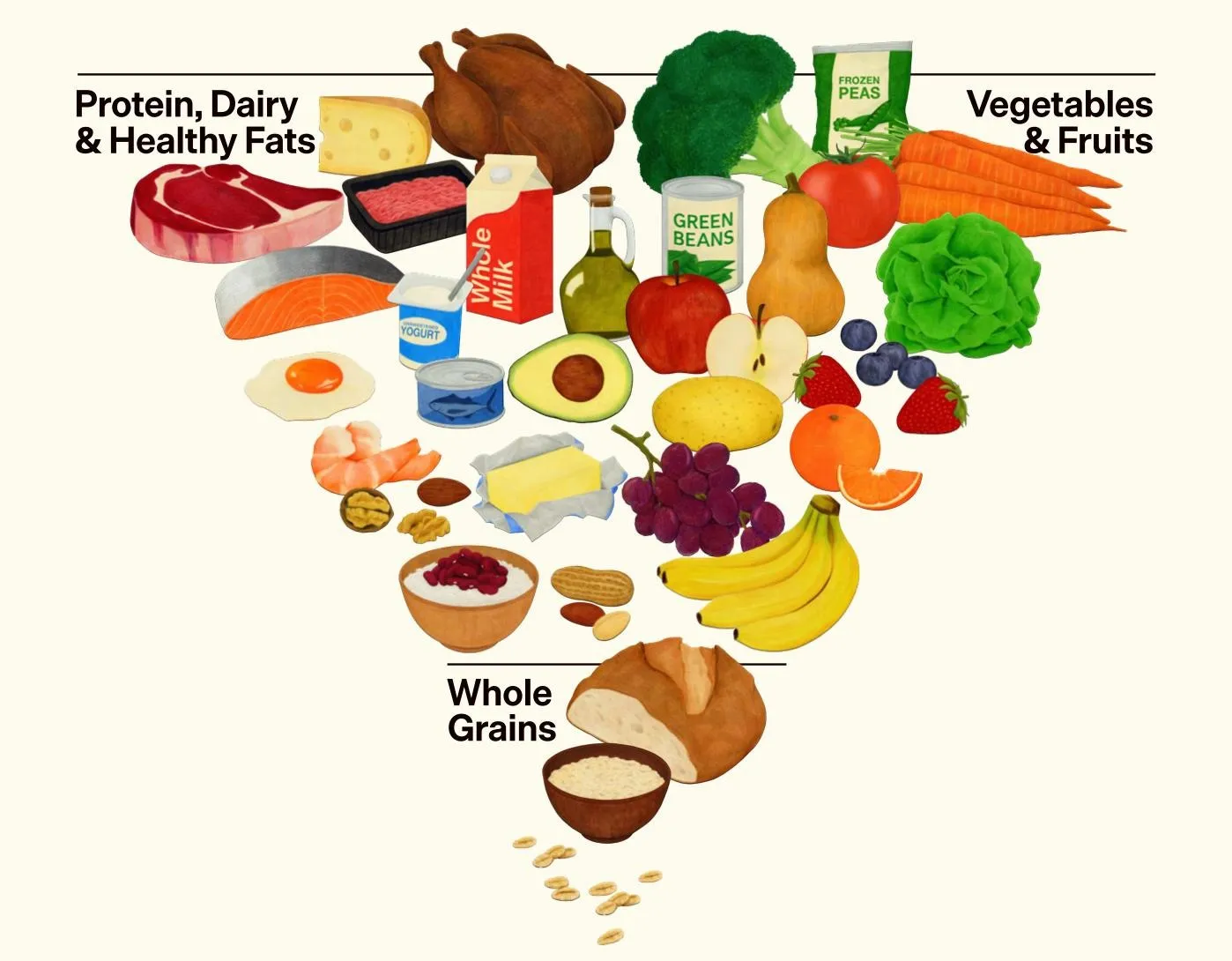
According to the official guidelines, the pyramid's three main sections represent:
- Protein, Dairy & Healthy Fats: Includes red meat, poultry, seafood, eggs, cheese, whole milk, yogurt, nuts, butter, olive oil, and avocado
- Vegetables & Fruits: All fresh, frozen, or canned varieties with no added sugars
- Whole Grains: Limited to 2–4 servings daily, with refined grains strongly discouraged
The protein recommendations represent a dramatic increase from previous guidelines. Instead of the long-standing 0.8 grams per kilogram of body weight, the new guidelines suggest 1.2–1.6 grams per kilogram—effectively doubling protein intake for many Americans. For a 150-pound person, this means 82–109 grams of protein daily, equivalent to approximately 10–14 ounces of meat or equivalent protein sources.
From Pyramid to Plate and Back Again: The Evolution of U.S. Dietary Guidance
To understand why this change matters, it helps to look at how federal nutrition guidance has evolved over the past three decades. The original food pyramid debuted in 1992 during George H.W. Bush's administration, emphasizing bread, cereal, rice, and pasta as dietary staples. This approach was heavily criticized for being influenced by grain industry lobbyists and contributing to America's obesity crisis.
In 2011, First Lady Michelle Obama helped introduce MyPlate, which divided a plate into four sections: fruits, vegetables, grains, and protein, with a separate circle for dairy. This simpler visual aimed to help Americans build balanced meals without complex measurements. Now, 15 years later, the Trump administration has completely abandoned the plate concept and revived the pyramid—but with a controversial twist.
The new guidelines arrive amid growing public awareness about nutrition science and increasing polarization around food politics. The "Make America Healthy Again" (MAHA) movement, championed by Health Secretary Kennedy, argues that previous guidelines were "antiquated" and influenced by corporate interests rather than science.
Expert Analysis: The Science Behind the Controversial Changes
Nutrition experts are deeply divided on the new guidelines. Supporters praise the emphasis on whole foods and reduced processed food consumption, while critics warn that the pyramid's design could undermine decades of heart health research.
Dr. Dariush Mozaffarian, a cardiologist and director of the Food is Medicine Institute at Tufts University, told NPR that focusing on whole foods is positive: "Highly processed foods are clearly harmful for a range of diseases, so to have the U.S. government recommend that a wide class of foods be eaten less because of their processing is a big deal and I think a very positive move for public health."
However, other experts express serious concerns. Christopher Gardner, a nutrition expert at Stanford University who served on the Dietary Guidelines Advisory Committee, told NPR: "I'm very disappointed in the new pyramid that features red meat and saturated fat sources at the very top, as if that's something to prioritize. It does go against decades and decades of evidence and research."
The American Heart Association issued a statement acknowledging positive aspects like limiting added sugars and processed foods, but added: "We are concerned that recommendations regarding salt seasoning and red meat consumption could inadvertently lead consumers to exceed recommended limits for sodium and saturated fats, which are primary drivers of cardiovascular disease."
Key Changes You Need to Know About
The 2026 dietary guidelines introduce five major shifts from previous recommendations:
- Protein Prioritization: Double the previous protein recommendations, with emphasis on animal sources like red meat, poultry, seafood, and eggs
- Full-Fat Dairy Encouraged: The guidelines explicitly recommend "full-fat dairy," a reversal of decades of advice to choose low-fat or fat-free options
- Added Sugar Elimination: No added sugars recommended for children under 10, and strict limits for adults (10 grams per meal)
- Ultra-Processed Foods Targeted: First-time explicit warning against "highly processed foods laden with refined carbohydrates, added sugars, excess sodium, unhealthy fats, and chemical additives"
- Alcohol Limits Relaxed: Specific daily limits removed (previously 1 drink for women, 2 for men), replaced with general advice to "consume less alcohol for better health"
Perhaps the most symbolic change is the embrace of beef tallow—rendered beef fat that was long considered a health pariah. The New York Times reports that Kennedy himself fried a turkey in beef tallow on Thanksgiving 2024, declaring "This is how we cook the MAHA way." The guidelines now explicitly recommend cooking with traditional fats like butter and tallow.

How the New Guidelines Affect School Lunches and Food Programs
While most Americans don't read dietary guidelines directly, these recommendations shape billions of meals served through federal programs. The guidelines directly influence:
- National School Lunch Program: Affecting 30 million children daily
- Military and Veterans' Meals: Shaping food served on bases and in VA facilities
- Supplemental Nutrition Assistance Program (SNAP): Influencing what foods are emphasized in nutrition education
- Women, Infants, and Children (WIC): Affecting food packages for vulnerable populations
A White House spokesperson told NBC News that the new guidance will be phased into schools and federal food programs over the next two years. This means children could see more red meat, full-fat dairy, and butter in their school meals, while whole grain requirements may be reduced.
What Happens Next: Implementation and Challenges
The rollout of the new food pyramid faces several practical and political challenges. Nutrition experts like Marion Nestle, professor emerita at New York University, argue that the protein emphasis "makes no sense (Americans eat plenty) other than as an excuse to advise more meat and dairy, full fat, which will make it impossible to keep saturated fat to 10% of calories or less."
Several health organizations may challenge the guidelines in court or through regulatory processes. The American Medical Association has praised the focus on limiting ultraprocessed foods but hasn't endorsed the meat and dairy emphasis. Meanwhile, plant-based nutrition advocates are alarmed by what Vox describes as "hostile" language toward vegetarian and vegan diets in the guidelines.
For everyday Americans, the changes mean rethinking basic nutrition principles. The inverted pyramid suggests building meals around protein and healthy fats rather than grains. Practical tips include:
- Start meals with a protein source (meat, fish, eggs, or dairy)
- Include generous portions of non-starchy vegetables
- Use full-fat dairy products instead of low-fat versions
- Limit grains to 2–4 servings daily, choosing whole grains exclusively
- Avoid added sugars, especially in beverages and packaged snacks
The Bottom Line: Key Takeaways from the New Food Pyramid
The 2026 dietary guidelines represent the most dramatic shift in federal nutrition policy in a generation. While the visual of an inverted pyramid is striking, the actual recommendations are more nuanced than they appear. Key points to remember:
- The guidelines still cap saturated fat at 10% of daily calories despite promoting full-fat dairy and red meat
- Ultra-processed foods and added sugars are explicitly discouraged—a point most nutrition experts applaud
- Protein recommendations have doubled, but plant-based proteins are de-emphasized compared to animal sources
- The changes will gradually affect school lunches, military meals, and food assistance programs
- Individuals should consult healthcare providers before making drastic dietary changes, especially those with heart conditions or cholesterol concerns
As the debate continues, one thing is clear: after 15 years of MyPlate, the food pyramid is back—but it's not the same pyramid your parents learned about in school. Whether this inverted approach will improve Americans' health or create new problems remains to be seen, but it undoubtedly marks a new chapter in the nation's ongoing conversation about what we should eat.