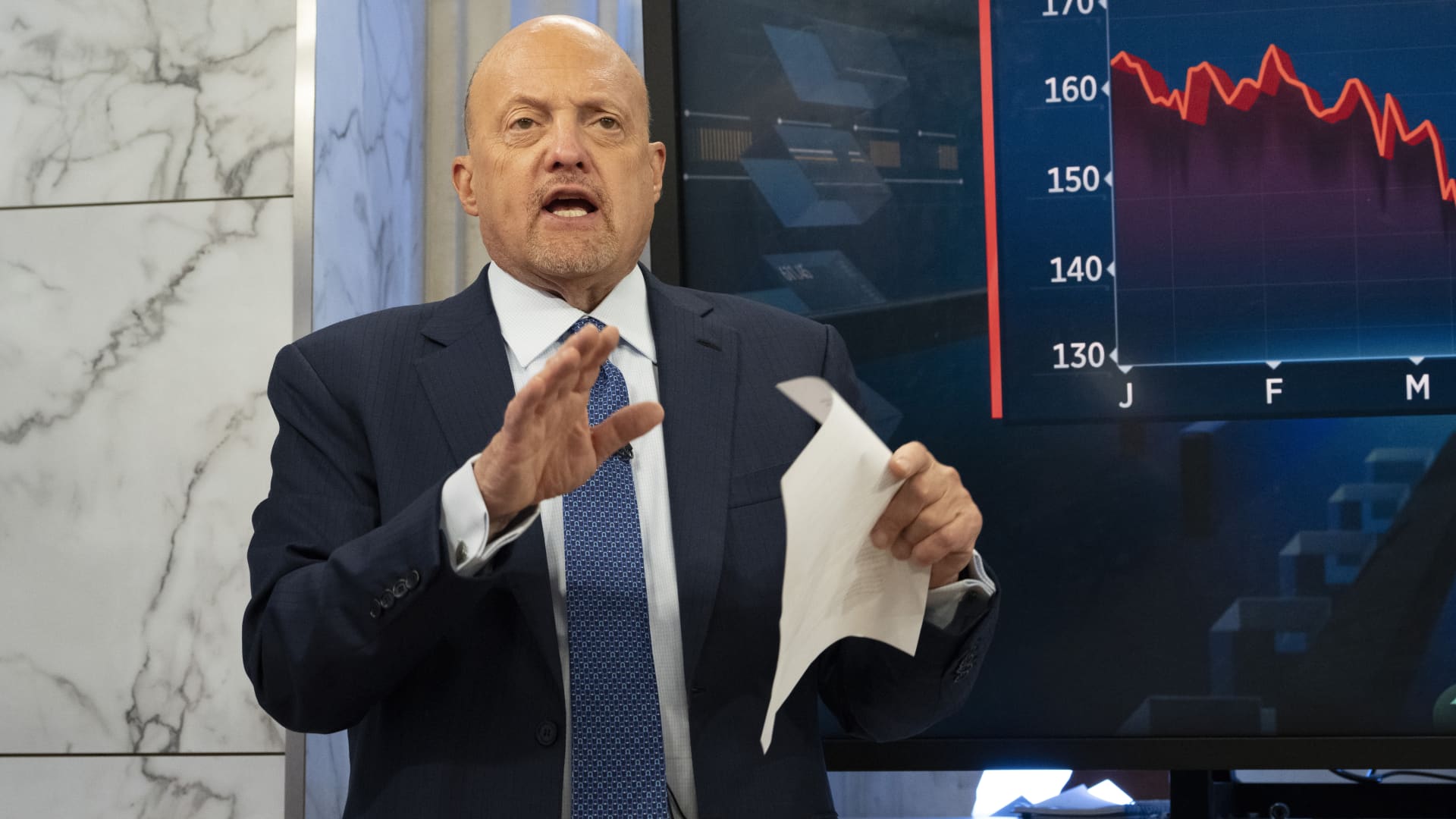
Jim Cramer, CNBC's influential market commentator, has issued one of his starkest warnings in years, cautioning investors about a potential 'Black Monday' market crash reminiscent of the historic 1987 collapse. The warning comes as U.S. markets reel from President Trump's sweeping tariff announcements that have already wiped $6.6 trillion from market values in just two days. Simultaneously, Cramer is sounding the alarm about what he calls 'the year of magical investing' coming to an end, urging investors to radically shift their strategies for 2026.
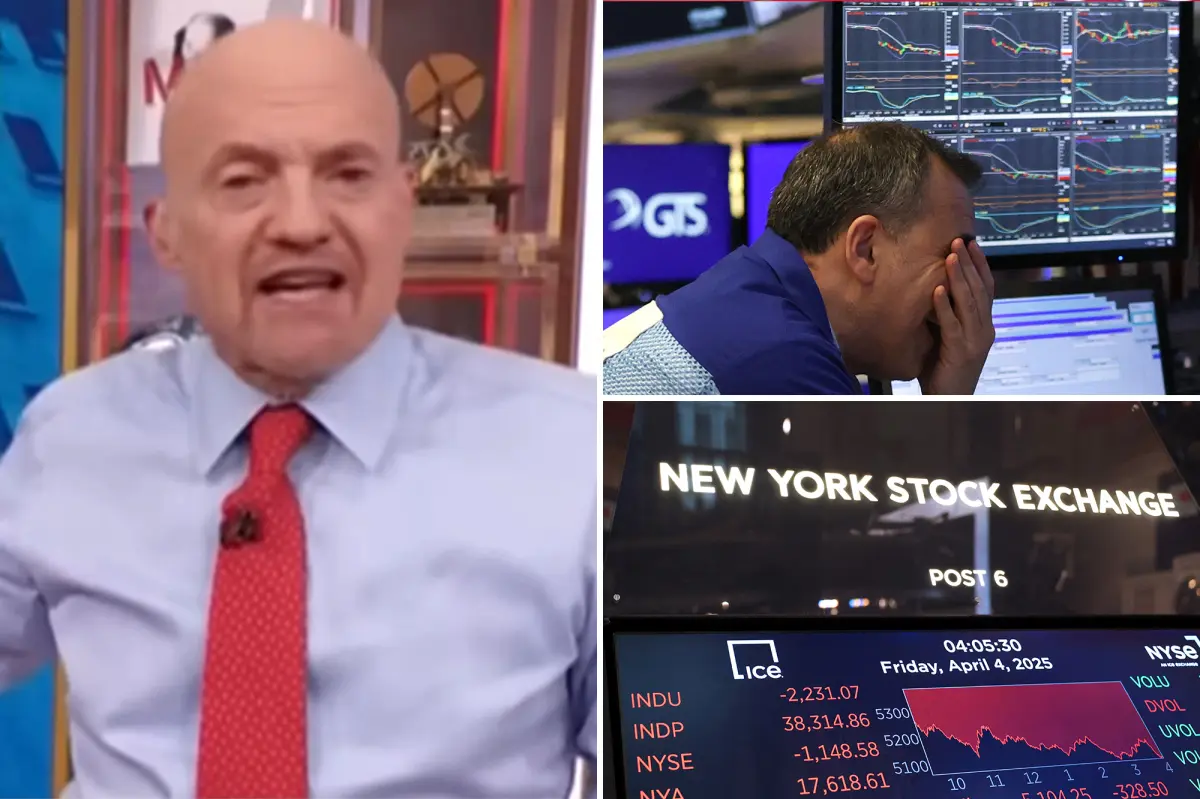
The Black Monday Warning: How Tariffs Could Trigger Historic Crash
In a dramatic Saturday broadcast that sent shockwaves through financial circles, Cramer warned that America could be in store for another 'Black Monday' market crash similar to the record 1987 collapse if President Trump doesn't curtail his aggressive tariff plans. 'If the president doesn't try to reach out and reward these countries and companies that play by the rules, then the 1987 scenario … the one where we went down three days and then down 22% on Monday, has the most cogency,' Cramer said on his show, referencing the worst single-day fall in the history of the Dow.
The 1987 crash saw the Dow Jones Industrial Average plummet by 22.6% in a single day—a catastrophic event that reshaped market regulations and investor psychology for decades. Cramer's warning comes after a brutal two-day sell-off that followed Trump's announcement of sweeping tariffs against nearly 90 countries. The Dow plunged by 3,910 points during those two days, marking the worst two-day loss since the pandemic, while the S&P 500 tumbled nearly 6%, and the tech-heavy Nasdaq saw similar devastating drops.
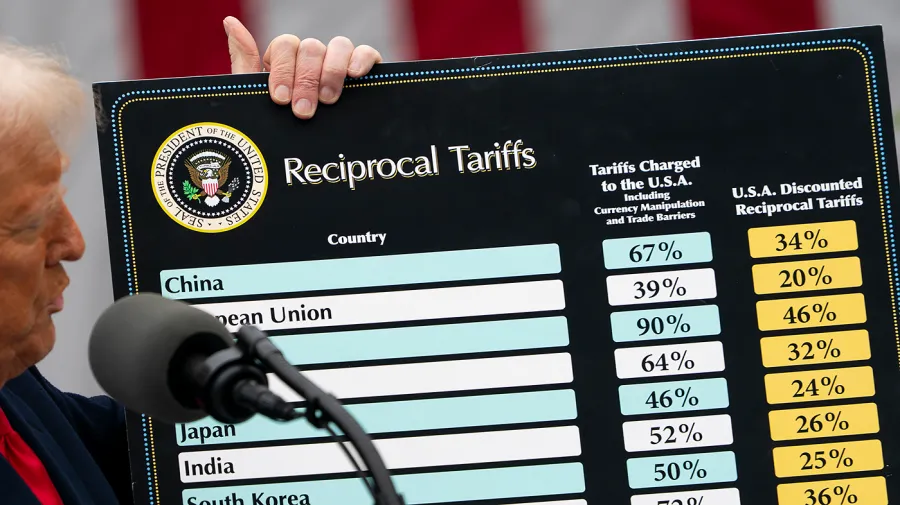
'We will not have to wait too long to know. We will know it by Monday,' Cramer added, setting a tense countdown for investors. The president shocked the global economy Wednesday when he announced a 10% blanket tariff on all imports to the U.S., with higher levies set to take effect on April 9 against major exporters like China, the European Union, Japan, and Vietnam. China has already announced retaliatory tariffs, escalating fears of a full-blown trade war.
From Tariff Supporter to Crisis Warner: Cramer's Dramatic Shift
What makes Cramer's warning particularly noteworthy is his previous position on tariffs. Just weeks earlier, Cramer had fully backed Trump's plan to impose tariffs, telling viewers he supported the president's approach. However, the market analyst said he would no longer be supportive if Monday's bleak outlook comes to pass. 'If President Trump stays intransigent and does nothing to ameliorate the damage that I saw these last few days, I'm not going to be constructive here,' Cramer said. 'And if Europe moves against our fabulous tech companies next week, then I will be furious.'
The dramatic shift underscores how quickly market sentiment has deteriorated. Stock futures dropped sharply on Sunday evening, with Dow Jones Industrial Average futures down more than 1,700 points at one point, pointing to what could be a disastrous day on Wall Street when markets opened Monday morning. While the futures recovered some of those losses later in the evening, the damage had already been done to investor confidence.
Apollo chief economist Torsten Slok ultimately warned that a recession may be in store for the U.S. depending on how long the market shock and tariffs last. 'If these levels of tariffs stay in place for several months and other countries retaliate, it will cause a recession in the U.S. and the rest of the world,' the expert said on Friday. Despite the alarms rung by economists and market analysts, Treasury Secretary Scott Bessent said the administration will not change course as he tried to downplay the fears of a looming recession.
Cramer's Crisis Playbook: What to Do When Markets Plunge
Amid the market turmoil, Cramer offered specific advice for investors caught in the crossfire. During 'Squawk on the Street,' Cramer said, 'If you were OK in 2007 and 2008, it came back,' referring to the financial crisis and how the market did eventually recover. 'It did take until 2013 to get the money back,' Cramer acknowledged, noting that investors who need their money now, such as retirees or those nearing retirement, are 'in limbo.' His clear directive: 'But don't sell, just hold.'
In fact, following these comments, Cramer actually bought more shares of two stocks for the CNBC Investing Club portfolio that he believed shouldn't be down as much as they were. The current market plunge, he explained, is a price-to-earnings ratio lowering event. 'That's what's happening. Once that happens, then I think you really have to start thinking, 'That's interesting.' It will get there.' P/E ratios are a standard way on Wall Street to evaluate what investors are willing to pay for stocks, and Cramer sees the current compression as a potential buying opportunity for those with the stomach to withstand volatility.
Cramer used the financial crisis as an analog and reflected on the advice he gave then. 'I came on the 'Today' show in 2007 and I said, 'If you need any money in the next five years, you should sell.' And it was a great call.' He continued, 'Then I came in at the 'Haines bottom.' Mark called me, the late Mark Haines, and he said, 'You got to get on board. It's a really good level to buy.' I came out and did that.' Mark Haines was a CNBC anchor credited with calling, while on air, the financial crisis market bottom on March 10, 2009—a legendary call that has become known as the 'Haines bottom.'

The End of Magical Investing: Cramer's 2026 Strategy Shift
Even as he navigates the immediate tariff crisis, Cramer is looking ahead to 2026 with a dramatically different investment philosophy. In a recent interview on the 'Investopedia Express' podcast, the CNBC star warned that 'the year of magical investing' is coming to an end. He cautioned that many stocks have soared too high on hype—name-checking companies tied to quantum computing, autonomous vehicles, and data center buildouts—and are due for a pullback. 'These stocks are really high and they're going to revert to where they were before the willy-nilly building of data centers,' he warned.
Why does this matter to investors? Only two of the 'Magnificent Seven' have beaten the S&P 500's gains in 2025. Cramer says that's a warning that the easy gains from AI hype are fading. But Cramer isn't telling investors to head for the exits. Instead, he suggests a strategic pivot: shifting from shares of companies building AI systems to blue chips using artificial intelligence to transform their businesses.
Cramer's 2026 Playbook: Four Key Moves Every Investor Should Make
First, trim the hype stocks. Cramer warned 'Investopedia Express' listeners to review their holdings of stocks tied to speculative themes. Many of these stocks were 'dramatically lower' not long ago, he said, and have since soared on hype, not fundamentals.
Second, pivot to companies using AI, not building it. So where should you look instead? Cramer's answer: avoid the companies racing to build AI and add shares of the legacy players deploying it. Johnson & Johnson 'is so exciting and doing great things,' he said, mentioning its recent use of AI for cancer treatments. He also pointed to Procter & Gamble, which is using Nvidia's technology to save costs associated with its supply chain. 'One of the reasons why I think next year is going to be a really good year for Procter is you're going to see all the things that they are doing with the technology,' he said. 'It's not evident yet.'
Third, own, don't trade. Cramer warned against seeing his stock picks as short-term plays. Recalling Warren Buffett, who famously said his favorite holding period is 'forever,' Cramer says he believes in buying and holding for the long haul. He differs with the Oracle of Omaha on what to buy. Buffett has told everyday investors to stick with low-cost index funds. Cramer suggests splitting your portfolio between index funds and four or five individual stocks you believe in, with a non-stock asset on the side for protection.
Fourth, save some fuel for a 'moon shot.' 'I want you to own, don't trade, and compound,' Cramer said. It's Buffett's lifelong philosophy in three words: buy good companies, reinvest the returns, and wait for the long-term gains to kick in. Peter Lynch, the legendary Fidelity fund manager, long argued that ordinary people could beat the pros by investing in what they know. Cramer agrees—but only if they're willing to do the homework. 'I want people to be able to pick five stocks,' he said. 'One is really a moon shot because I feel that it only takes one to change your life.'
Where Things Stand Now: Markets at a Crossroads
As of April 2025, the market sits at a critical juncture. The Dow futures have recovered some of their dramatic losses, but uncertainty remains the dominant theme. Trump administration officials on Sunday sought to defend the president's tariffs as anxiety over the economy grows. National Economic Council Director Kevin Hassett insisted the massive tariffs won't have a 'big effect on the consumer in the U.S.,' while Treasury Secretary Scott Bessent described the tariffs as a 'one-time price adjustment.'
Meanwhile, countries are rushing to negotiate with the administration to lower the tariff burden they face. Israeli Prime Minister Benjamin Netanyahu arrived in the Washington area on Sunday evening and is expected to ask about the 17% tariff imposed on his country's exports to its greatest ally. Yet Trump officials at times have also indicated that the tariffs are here to stay, claiming they are necessary to rebuild the U.S. manufacturing sector and re-shape the world trading system.
What Happens Next: The Road Ahead for Investors
The coming weeks will be critical for determining whether Cramer's 'Black Monday' warning becomes reality or whether markets stabilize. Much depends on whether the Trump administration shows flexibility in its tariff approach and whether other countries continue to escalate with retaliatory measures. For investors, Cramer's dual message provides both immediate guidance and long-term strategy: weather the current storm by holding quality positions, while simultaneously preparing for a new investment landscape in 2026 that rewards fundamentals over hype.
As Cramer himself noted about his controversial predictions, 'I have not advocated that course since 2009.' While he still does lightning rounds for callers on stocks to 'buy buy buy,' the message behind his picks has changed. Today's Cramer is less about rapid-fire trading and more about strategic positioning for both crisis and opportunity. In a market environment where $6.6 trillion can vanish in two days, that shift in perspective might be exactly what investors need to navigate the turbulent waters ahead.